
MSME Machinery Reliability in Hyderabad: AMC vs Internal Team Risk
Don't let unpredictable breakdowns derail your profits. Discover why true uptime requires more than just a contract—it demands guaranteed emergency response from MachineryFix quickly.

MachineryFix
Industrial Repair & Maintenance Experts · 17 July 2026
Need this fixed?
Certified technicians, dispatched from our Hyderabad hub.
A single hour of unplanned downtime in an MSME factory can result in losses ranging from ₹50,000 to over ₹5 lakh, depending on whether the failure affects a CNC machine in Uppal or a hydraulic press line in Balanagar. For plant managers and maintenance heads overseeing operations across Hyderabad’s sprawling industrial belt—from Nacharam IDA to Bollaram—developing a robust MSME machinery uptime strategy Hyderabad is not merely an operational goal; it constitutes a critical financial imperative. This analysis dissects the true cost of mechanical failure, comparing the inherent risks of traditional internal teams and static Annual Maintenance Contracts (AMCs) against modern, on-demand digital service solutions.
Calculating True Downtime Cost: Beyond Labor and Parts
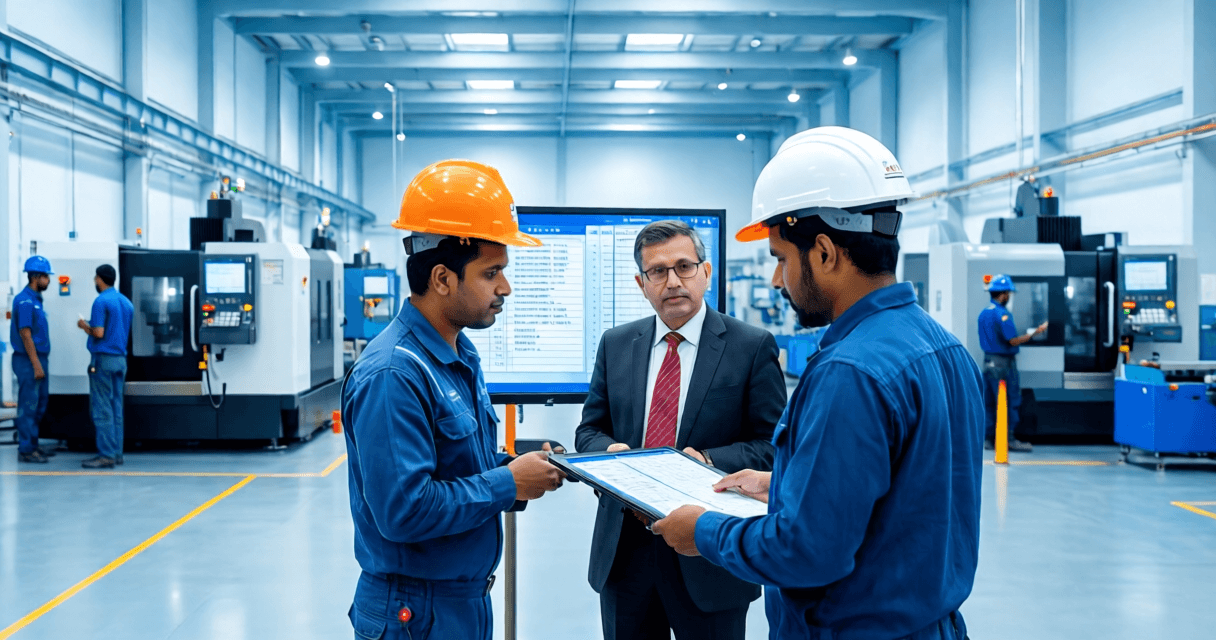
> Indian factory managers use the MachineryFix platform to match with the nearest verified technician within minutes of logging a breakdown — no phone trees, no delays.
Most factory owners mistakenly calculate downtime costs by tallying only lost production hours or immediate parts replacement expenses. This calculation fundamentally neglects the true financial drain. The actual cost of a breakdown—the metric that keeps plant owners awake at night—is far more complex, encompassing several hidden drains on profitability. When a conveyor system stalls in a facility near Kattedan Industrial Area, visible costs include wasted labor time and idle machine capacity. Yet, the invisible expenses often significantly dwarf these figures.
One must factor in opportunity cost, which represents revenue lost because production halts prevent fulfilling existing orders or securing new contracts. Consider a textile unit operating in Cherlapally; if weaving machines stop for half a day, they forfeit that entire operational capacity, translating directly into missed receivables and strained supplier relationships. Furthermore, there are escalation costs—the premium paid for emergency service mobilization, rush shipping of specialized parts, and mandatory overtime wages used to mitigate the delay.
Another critical element is reputational damage. Repeated downtime incidents signal systemic instability to large corporate clients and investors, potentially jeopardizing future contract bids. A plant manager at a facility in Jeedimetla Cluster knows that operational reliability is non-negotiable for major buyers. Addressing this comprehensive cost model requires shifting focus from reactive repair to proactive risk management. This demands immediate, specialized intervention when failure occurs, bypassing the costly escalation cycle inherent in traditional service models. Instead of waiting days for a generic contractor or relying solely on internal manpower lacking niche expertise (such as advanced hydraulics diagnostics or specific CNC programming), modern platforms provide verified, localized assistance. The entire process, from initial diagnosis to repair completion, must streamline to keep downtime to a minimum. For factory owners seeking immediate relief from unpredictable operational costs, understanding that sophisticated infrastructure is required guides them toward reliable solutions like those provided by MachineryFix's platform.
The In-House Team Model: Overhead vs. Expertise Gap in Hyderabad Manufacturing
Maintaining an internal maintenance team—a dedicated group of mechanical, electrical, and specialized technicians on staff 24/7—is the traditional method for managing industrial machinery. While a reliable workforce offers perceived security, this model carries substantial hidden financial burdens and inherent risk gaps, particularly within the fast-paced MSME sector operating across Hyderabad.
From a budgetary perspective, the overhead is immense: salaries, benefits, mandatory insurance, continuous specialized training costs, housing allowances, and mitigating skill decay during slow periods. Beyond these salary expenses, there exists the constant problem of skill specialization and retention. Modern machinery operates on vastly more complex principles than five years ago. A maintenance team proficient in basic electrical work may prove entirely inadequate when facing advanced diagnostics on a modern packaging machine or deciphering an error code specific to a high-speed lathe.
When a critical breakdown occurs—for example, a hydraulic press line failure stemming from a complex valve system malfunction—the internal team might dedicate valuable hours simply diagnosing the root cause. This wastes precious uptime minutes that equate directly to thousands of rupees in lost revenue. The gap between available general expertise and required niche skill represents the model’s greatest weakness. Moreover, even highly dedicated in-house teams are susceptible to human limitations: fatigue, lack of specific OEM-grade parts inventories, or limited coverage outside standard working hours. While internal commitment remains invaluable, relying exclusively on this structure means accepting a high fixed cost for an unpredictable level of specialized emergency service.
> MSME factory owners across India use machineryfix.in to book certified technicians with upfront pricing, identity verification, and digital job cards — all from a phone.
Structured AMC Contracts: Analyzing Scope, Exclusions, and Emergency Response Guarantees
Many MSME factories depend heavily on Annual Maintenance Contracts (AMCs) provided by equipment manufacturers or third-party service providers. These contracts offer the perceived comfort of predictable budgeting—a single annual outlay to cover maintenance needs. However, like all fixed agreements, AMCs harbor critical limitations that can cost a factory significantly when failure strikes.
The primary pitfalls of traditional AMCs involve scope limitation and response time ambiguity. First, every AMC contains exclusions. They frequently fail to cover damages caused by external factors—such as severe voltage fluctuations common during monsoon season in Telangana, dust ingress from nearby industrial clusters, or accidental misuse. When the failure falls outside the tightly defined scope (for instance, a major electrical board burnout versus simple lubrication), the factory faces an unexpected, massive out-of-pocket expense.
Second, and most critically for uptime strategy, AMCs often guarantee *service* rather than guaranteeing *speed*. A contract might promise "prompt service," but this vague language holds little weight when a machine in Patancheru IDA has stopped running at 2 PM on a Saturday. The response time can stretch into days while the vendor prioritizes their higher-paying corporate clients. For crucial operations, such delays are simply unacceptable because they directly translate to lost production capacity and stalled profitability.
To effectively manage risk, factory managers must treat AMCs not as a complete solution, but as one piece of a multi-layered strategy. They should supplement them with dynamic, on-demand support that bypasses the limitations of fixed contracts. This requires immediate access to a pool of highly skilled, verified experts who can be mobilized based on proximity and specialized need, rather than being restricted by geographical service zones or contract schedules. For those seeking localized assurance before committing to an AMC, exploring options like booking a certified technician directly from their phone via MachineryFix is prudent.
Hybrid Reliability Strategy: Leveraging Digital Platforms for Risk Mitigation (The Optimal Path)
The optimal MSME machinery uptime strategy Hyderabad does not choose between the internal team model and traditional AMCs; rather, it integrates the best of both worlds using advanced digital platforms. This hybrid approach mitigates the high fixed costs associated with a full-time specialized workforce while eliminating the critical risk gaps inherent in static contracts.
The core mechanism for achieving this reliability is instant access to on-demand expertise. Instead of depending on generalized service agreements, a manager uses a platform that instantly maps their breakdown—say, a complex failure in a CNC machine near Uppal—to the nearest available expert possessing the exact required skill set (e.g., specific brand knowledge or advanced electro-mechanical diagnosis). This is where MachineryFix's Intelligent Dispatch Engine becomes invaluable. It shifts the industry focus from "when will someone get here?" to "who can solve this, and how quickly?"
Furthermore, modern platforms introduce elements of financial transparency previously unavailable in local industrial repair services. By allowing factory managers to engage in competitive bidding, they gain crucial budgetary control, comparing multiple proposals for the same job (manpower + parts) before accepting any work. This feature alone saves an MSME business significant capital compared to a single-vendor contract.
This digital layer also provides unmatched operational visibility. The Digital Service Catalogues create perfect audit trails—a historical record of every diagnostic, every part replaced, and the technician who performed the job. For compliance audits (like ISO standards) or simply for future budgeting, this centralized log is invaluable. The ability to compare proposals and select a preferred service provider also facilitates re-hiring for recurring tasks, solidifying long-term partnerships built on proven performance. This combination of speed, transparency, and specialization defines the modern standard in industrial reliability.
Implementing Uptime Excellence: A Step-by-Step Guide to Predictive Maintenance in MSMEs
Moving from merely reacting to breakdowns (reactive maintenance) or performing scheduled upkeep (preventive maintenance) toward true Predictive Maintenance (PdM) represents the pinnacle of maximizing uptime and minimizing cost risk. PdM does not wait for failure; it predicts the point of failure using data, allowing intervention while the machine remains fully functional.
For MSME factories in Hyderabad—from high-volume operation centers in Nacharam IDA to specialized units in Bollaram—implementing PdM requires a structured approach centered around constant monitoring and sophisticated analysis. The first step involves meticulously gathering baseline data: understanding not just *what* machines run, but *how* they are operated, their typical load cycles, and historical failure points (e.g., "This compressor routinely fails after 3000 hours of continuous operation").
The second critical step is integrating monitoring technologies—vibration sensors on motors, thermal imaging cameras for electrical panels, and oil particle counters in hydraulic systems. This data feeds into the system that informs the Predictive Maintenance AMC. Instead of a generic contract covering everything "up to X limit," this specialized agreement uses real-time sensor readings to trigger maintenance alerts weeks before failure is imminent.
The third step involves utilizing platforms like those offered by MachineryFix, which integrate these diagnostics with their service network. When an anomaly is detected (e.g., increased vibration in a conveyor belt motor), the system doesn't wait for the manager to call; it automatically flags the need and matches the job requirement to the nearest Vetted Technician Network expert equipped to handle that specific diagnostic task.
This entire workflow, underpinned by robust technology, ensures maintenance is always targeted, efficient, and preemptive. It transforms a potential catastrophic ₹5 lakh loss into a manageable service call. By making proactive planning the default setting—and leveraging the platform’s ability to provide fast support and high reliability (evidenced by their 4.8/5 average rating)—MSMEs secure continuous operation, which is the ultimate measure of success in manufacturing.
Securing Uptime: The Modern Industrial Repair Mandate
For factory managers who have navigated the complexities of internal team overhead versus the limitations of traditional AMCs, the solution lies in unparalleled speed and verifiable expertise. Downtime does not wait for paperwork or scheduled service windows; it happens instantly. Similarly, your repair support needs to be instant. MachineryFix was built specifically to address this critical gap in India’s industrial infrastructure.
We understand that when a machine stops—whether it is a Lathe Machine in Secunderabad or an advanced Welding Equipment unit in the MIDC zones—every minute costs capital. Our system does not rely on general service lists; it utilizes our Intelligent Dispatch Engine, which instantly matches your specific breakdown (the symptom, the error code, the machine make) with the most geographically proximate and skill-certified technician. This proximity-based matching is why we maintain rapid response, day or night.
The integrity of service delivery remains paramount. Every technician within our Vetted Technician Network undergoes rigorous checks, including identity verification and intensive skill evaluations, ensuring that the individual arriving at your factory gate is not just a mechanic, but a proven expert. You gain control through transparency: compare competitive bidding proposals before accepting any repair job, view detailed service logs via the Digital Service Catalogues, and ensure full accountability with mutual two-way rating systems.
MachineryFix allows Indian factory owners to bypass the systemic risks of traditional maintenance models. We offer 24/7 emergency support backed by a pan-India coverage that delivers immediate resolution power. Whether planning for preventative care through our Predictive Maintenance AMC or requiring an emergency hydraulic expert, the process is digitized and streamlined. Take control of your uptime strategy today. To see how quickly we can get your machines back online, visit Book a Technician or call us at +91 70133 33007. For immediate booking support, book a technician now to secure rapid, verified service: https://www.machineryfix.in/#book.
Published on
India's on-demand industrial repair platform — certified technicians dispatched fast.
Frequently Asked Questions
How quickly can I get a technician for MSME machinery uptime strategy Hyderabad in India?
MachineryFix's Intelligent Dispatch Engine matches your breakdown with the nearest verified technician in minutes. Technicians are dispatched quickly across India. Book at machineryfix.in or WhatsApp +91 70133 33007.
Are MachineryFix technicians verified and background-checked?
Yes. Every technician on MachineryFix passes Aadhaar-based identity verification plus rigorous skill evaluation before being onboarded. This is why MachineryFix maintains a 4.8/5 average rating from factory clients across India.
What is a Predictive Maintenance AMC and how does it work?
A Predictive Maintenance AMC (Annual Maintenance Contract) from MachineryFix covers scheduled inspections, condition monitoring, and priority emergency response. It reduces unplanned breakdowns by 40-60% and is ideal for factories running critical CNC, hydraulic, or textile machines.
How much does industrial machine repair cost in India?
Cost depends on the machine, the fault and the parts required. MachineryFix uses competitive bidding — you receive upfront proposals from multiple local experts before committing, so you always get a fair price.
What documentation does MachineryFix provide after a repair?
MachineryFix generates a Digital Service Catalogue entry for every job — logging the fault, diagnosis, parts replaced, technician ID, and timestamps. This digital job card is accepted for ISO 9001 and GMP compliance audits.
Can I rehire the same technician for future jobs or an AMC?
Yes. MachineryFix's re-hiring feature lets you save a preferred technician directly to your account. You can rebook them for follow-up work, recurring maintenance, or a full AMC contract — keeping your factory history consistent.
Need a certified technician?
Get one dispatched fast.