textile machinery repair Bhilwara fabric mills Rajasthan
Factory downtime costs lakhs per hour. Learn how textile machinery repair Bhilwara f gets resolved fast. MachineryFix dispatches verified experts quickly.

MachineryFix
Industrial Repair & Maintenance Experts · 1 July 2026
Need this fixed?
Certified technicians, dispatched from our Hyderabad hub.
Industrial downtime in India's MSME sector represents a financial catastrophe, not merely an inconvenience. For textile units operating within industrial clusters like Bhilwara, every hour a weaving loom or dyeing machine remains idle can incur lost production revenue ranging from ₹50,000 to ₹5 lakh, before factoring in labor costs and inventory spoilage. Facing critical equipment failure demands immediate, expert intervention; understanding the depth of modern industrial breakdowns is the first step toward minimizing these massive losses.
The high stakes involved render traditional, slow service models obsolete. Today’s plant managers require an integrated, on-demand system that guarantees technical proficiency alongside surgical precision in logistics. The industry shift from reactive repairs to proactively managed maintenance is no longer optional—it forms the core backbone of profitability for any textile unit operating across Rajasthan’s industrial belts.
Understanding the Failure: Diagnosing Beyond the Red Light
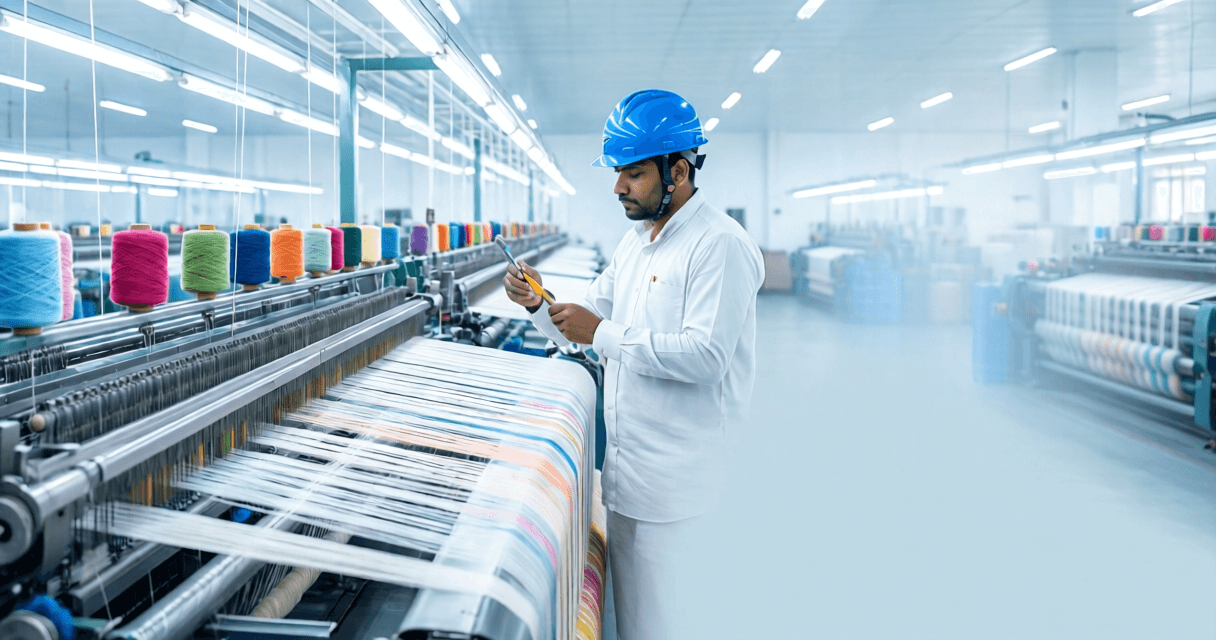
Complex textile equipment—whether an advanced warp knitting machine, a high-speed shuttle loom, or a precision dyeing unit—rarely stops due to simple mechanical wear. Modern industrial failures are usually systemic, involving complex interplay between electrical load variations, material stress, and calibrated component failure.
A true understanding of failure necessitates meticulous diagnosis of symptoms. Are the error codes tied to the motor control unit (MCU), or does the fault reside deeper within the pneumatic system? In textile clusters near Bhilwara’s industrial zones, common issues include: - Electrical Spikes: Frequent voltage fluctuations resulting from grid instability or nearby heavy machinery usage often damage sensitive PLCs and sensors. This is a persistent challenge across many MIDC areas in Rajasthan. - Dust and Lint Ingress: The working environment of a textile mill introduces abrasive contaminants that compromise gearbox oil integrity and jam bearings over time. - Material Misalignment: Stress fractures in shafts or improper tensioning in high-speed conveyer systems frequently cause catastrophic failure, especially under continuous production schedules.
A rudimentary repair addresses only the symptom—for example, replacing a broken belt. A professional diagnosis identifies the root cause: perhaps the faulty bearing that caused the break, or the voltage regulator that failed due to insufficient grounding. This level of analysis is critical. Before committing resources, operations staff must receive a comprehensive diagnostic assessment detailing not just *what* broke, but precisely *why*. Platforms like MachineryFix enforce this standard by requiring detailed symptom descriptions (error codes, observed sounds, specific machine make/model) at the outset, ensuring only certified experts arrive with the correct diagnostic tools and knowledge base.
Immediate Response Steps: The Rapid-Response Advantage in Crisis Management
The moment production halts due to machinery failure—particularly during peak operational hours—every minute lost translates directly into tangible financial loss measured in lakhs of rupees. Therefore, response time is as critical as repair quality itself. Plant engineers must abandon the days-long wait for local vendors and adopt an optimized, digitally managed rapid deployment system.
When a breakdown occurs, the process must be highly structured: 1. Immediate Documentation: Capture photos, note error codes, and record which operational cycles were running when failure occurred (e.g., "During high tension warp setup"). This initial data is invaluable for the arriving technician. 2. Digital Mobilization: Instead of multiple phone calls to general service providers, use a dedicated platform that instantly cross-references the breakdown against its vast network of specialized expertise. This structured approach bypasses delays associated with generalized services. 3. Proximity Matching and Bidding: A sophisticated system does not simply dispatch *a* technician; it sends the *best*, most proximate expert available immediately. Furthermore, access to features like competitive bidding allows facility managers to balance speed against cost efficiency—a capability that has saved clients substantial amounts of money in industrial hubs like Jeedimetla and across Rajasthan. 4. Verified Arrival: Upon arrival, verify the identity and credentials of the specialist. The assurance provided by working with a Vetted Technician Network, where every expert undergoes rigorous skill evaluations and skill evaluations, eliminates the risk associated with generic labor.
MachineryFix’s commitment to rapid response is built into its core process. Whether located in the bustling industrial zones near Uppal or a smaller textile unit in Bhilwara, this rapid deployment capability minimizes expensive downtime and accelerates return to full capacity. If an emergency arises outside standard working hours, 24/7 emergency support remains available via WhatsApp at +91 70133 33007.
Common Root Causes: Why Textile Machines Fail in India’s Climate
The operational environment of Indian MSME factories presents a unique and harsh set of challenges to machinery longevity, extending far beyond the expected wear and tear found in developed economies. Maintenance planning must account for geo-specific stressors. Understanding these root causes is essential for transitioning from repair mode into preventative maintenance.
Key environmental and systemic contributors to textile machinery failure include: - Voltage Fluctuation and Power Quality Issues: The erratic nature of grid electricity, often compounded by local transformer loading (especially in densely packed industrial areas), subjects sensitive electronics and motors to repeated stress cycles. This remains arguably the largest non-mechanical cause of failure across Indian industries. - Dust, Humidity, and Contaminants: Textiles generate substantial lint, dust, and airborne particles. When combined with monsoon humidity, these contaminants accelerate corrosion on metal components and create electrical conductivity issues that damage wiring harnesses. - Operator Error & Improper Handling: Although skilled labor is abundant, insufficient formal training in the operation or basic troubleshooting of highly sophisticated modern equipment (like advanced CNC-guided looms) remains a frequent failure point. Misalignment or improper shutdown procedures can cause severe component stress. - Parts Substitution Risks: The temptation to use cheap, unverified replacement parts often triggers system failures because the substitute lacks the original manufacturer’s specified tolerance and material strength, leading to cascading damage down the line.
To mitigate these risks, maintenance heads must integrate specialized monitoring solutions. Utilizing the Digital Service Catalogue allows logging every past service—every part replaced, every diagnostic test performed—creating a historical record that is invaluable for internal compliance (perfect for ISO audits) and accurately predicting future failure points based on machine usage cycles and local environmental stress data.
Preventive Actions: Shifting from Repair Costs to Investment ROI
The most cost-effective repair is the one that never has to happen. For textile mills in Bhilwara, moving toward a proactive maintenance philosophy constitutes an economic imperative. Prevention requires structured planning, investment in technology, and institutionalizing best practices across the facility.
The primary tool for this transition is the Predictive Maintenance AMC (Annual Maintenance Contract). Unlike traditional AMCs that merely promise labor availability, MachineryFix’s model provides a comprehensive framework: 1. Systematic Monitoring: The plan moves beyond scheduled servicing to monitoring actual machine health indicators—vibration analysis on motors, oil particulate counts in gearboxes, and real-time electrical load profiling. 2. Predictive Alerts: Before a component fails (for instance, predicting bearing failure three months out), the system alerts your maintenance team, allowing parts to be ordered and technicians scheduled during planned downtime, avoiding emergency stoppage entirely. 3. Standardized Protocols: These contracts enforce standardized operational checklists for cleaning, lubrication, and calibration, ensuring that ambient factors like dust ingress are managed systematically across all zones of the plant.
Adopting this model drastically reduces the 'mean time to repair' (MTTR) because when a minor issue does occur, the technician is already pre-equipped with knowledge of common failure modes specific to that machine type in that operational environment. A facility manager at Kattedan Industrial Area reported: "Downtime reduced from days to hours after switching to MachineryFix's predictive service model." This transition transforms maintenance spending from an unpredictable expense into a measurable, controlled investment with a guaranteed Return on Investment (ROI).
How MachineryFix Helps: The Convergence of Speed and Certainty
The industrial complexity faced by textile mills in Bhilwara demands more than just a quick fix; it requires a complete ecosystem that handles logistics, expertise vetting, financial transparency, and technical diagnosis simultaneously. MachineryFix consolidates India's fragmented repair service market into one reliable platform.
The solution integrates four core components to ensure absolute reliability: - Intelligent Dispatch Engine: It eliminates the guesswork of local sourcing. This engine instantly matches your specific breakdown (e.g., "Error Code E45 on a Jacquard Loom, Bhilwara") with the nearest, most specialized expert available at that moment. This capability enables the reliable fast response time needed during critical production hours. - Vetted Technician Network: By requiring identity verification and passing rigorous skill evaluations across 14 industries (from CNC Machines to Conveyor Systems), the platform eliminates risk associated with uncertified labor, providing confidence in every service call. This commitment is reflected by an average rating of 4.8/5. - Digital Service Catalogue & Transparency: Every interaction—the initial diagnosis, the parts used, the final test run—is logged digitally. This comprehensive record provides unparalleled transparency and serves as a massive asset for maintaining ISO compliance or simply proving operational uptime to stakeholders. - Competitive Bidding: Allowing users to compare multiple expert bids before accepting service ensures that quality does not compromise cost. As one client noted in the Jeedimetla Cluster: "Competitive bidding saved us 20% on our last repair without sacrificing speed."
The combination of guaranteed expertise (Vetted Technicians) and algorithmic speed (Intelligent Dispatch Engine) means operations are no longer at the mercy of geographical location or limited working hours. It provides a unified, powerful solution for machine repair India that works as hard and as quickly as the looms do. For immediate assistance or to schedule a service call, utilize the dedicated WhatsApp number: +91 70133 33007.
Why MachineryFix Is India's Fastest Repair Network
The industrial landscape of India, particularly the MSME sector, is defined by immense growth potential juxtaposed with volatile infrastructure and skilled labor shortages. Managing this complexity requires a service provider that is not merely fast, but fundamentally reliable—a reliability built on technology, verification, and operational scale. MachineryFix engineered its platform precisely for these challenges.
The company bypassed the limitations of traditional industrial services by creating a digitally orchestrated supply chain. It does not simply send mechanics; it dispatches certified technical problem-solvers. The flow from Step 1: Describe problem (via the app) to Step 2: Get matched instantly (via Intelligent Dispatch Engine) and finally to Step 4: Back up & running (with a digital job card and guaranteed parts) ensures minimal friction and maximum uptime for textile units in Bhilwara, or any other industrial cluster across India.
The platform’s commitment extends beyond the repair itself; it focuses on building long-term operational resilience. The ability to rehire favorite technicians for an AMC, paired with two-way mutual rating systems, creates a continuous loop of quality improvement benefiting both the service network and the client's bottom line. It understands the gravity of downtime—it is where profit vanishes. By providing 24/7 support and consistently delivering solutions quickly, it ensures that the factory owner’s focus remains purely on production, not on managing breakdowns.
Do not let unpredictable breakdowns dictate profitability. Take control of your maintenance cycle today by connecting with India's most trusted industrial service provider. To book a verified expert for textile machinery repair Bhilwara or any other critical breakdown, visit machineryfix.in immediately, or call/WhatsApp at +91 70133 33007.
Published on
India's on-demand industrial repair platform — certified technicians dispatched fast.
Frequently Asked Questions
How quickly can I get a technician for textile machinery repair Bhilwara f in India?
MachineryFix's Intelligent Dispatch Engine matches your breakdown with the nearest verified technician in minutes. Technicians are dispatched quickly across India. Book at machineryfix.in or WhatsApp +91 70133 33007.
Are MachineryFix technicians verified and background-checked?
Yes. Every technician on MachineryFix passes Aadhaar-based identity verification plus rigorous skill evaluation before being onboarded. This is why MachineryFix maintains a 4.8/5 average rating from factory clients across India.
What is a Predictive Maintenance AMC and how does it work?
A Predictive Maintenance AMC (Annual Maintenance Contract) from MachineryFix covers scheduled inspections, condition monitoring, and priority emergency response. It reduces unplanned breakdowns by 40-60% and is ideal for factories running critical CNC, hydraulic, or textile machines.
How much does industrial machine repair cost in India?
Cost depends on the machine, the fault and the parts required. MachineryFix uses competitive bidding — you receive upfront proposals from multiple local experts before committing, so you always get a fair price.
What documentation does MachineryFix provide after a repair?
MachineryFix generates a Digital Service Catalogue entry for every job — logging the fault, diagnosis, parts replaced, technician ID, and timestamps. This digital job card is accepted for ISO 9001 and GMP compliance audits.
Can I rehire the same technician for future jobs or an AMC?
Yes. MachineryFix's re-hiring feature lets you save a preferred technician directly to your account. You can rebook them for follow-up work, recurring maintenance, or a full AMC contract — keeping your factory history consistent.
Need a certified technician?
Get one dispatched fast.

