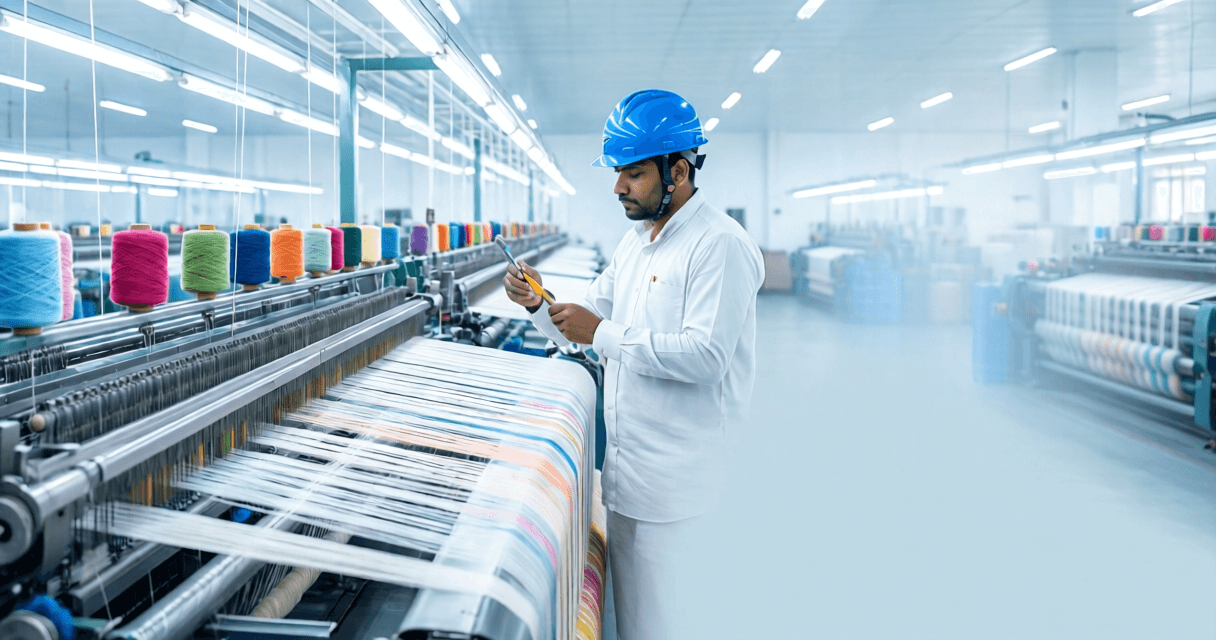
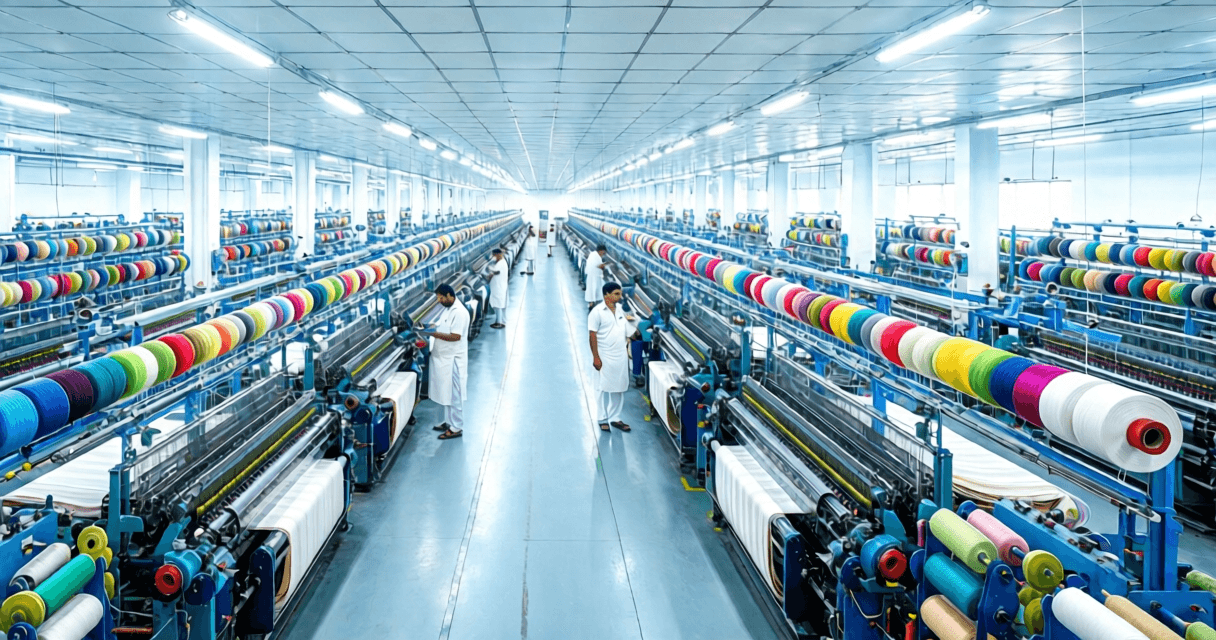
textile jute machinery repair Kolkata Bihar agro processing
Factory downtime costs lakhs per hour. Learn how textile jute machinery repair Kolka gets resolved fast. MachineryFix dispatches verified experts quickly.

MachineryFix
Industrial Repair & Maintenance Experts · 3 July 2026
Need this fixed?
Certified technicians, dispatched from our Hyderabad hub.
# The Cost of Silence: Mastering Textile Jute Machinery Repair and Agro Processing Uptime in Bihar
⚠️ WARNING TO PLANT MANAGERS: Before calling any local repair service, calculate your true cost of downtime. In India’s competitive manufacturing landscape, every hour a critical machine—be it a weaving loom, a jute spinning frame, or an agro processing unit—is stalled can hemorrhage between ₹50,000 and ₹3,00,000 in lost production, spoiled inventory, and penalty charges. Downtime is not merely an inconvenience; it represents immediate financial risk to the MSME enterprise.
When managing complex industrial systems, especially those requiring specialized expertise like textile jute machinery repair Kolka, speed and verifiable technical skill are non-negotiable necessities. Operating within industrial zones near Patna or any major cluster in Bihar demands a systematic approach to unexpected breakdowns. Modern factory floors require an on-demand solution that maintains uncompromising standards of quality and time efficiency.
Understanding the Failure: Beyond Simple Breakdowns
In large MSME factories, particularly those handling complex materials like jute and specialized textiles, failure rarely occurs in isolation. A single component seizure—for instance, a bearing failing on a spinning machine—can trigger a cascade of secondary failures stemming from overheating or improper load distribution. Factory owners often mistakenly treat the symptom (the broken part) instead of diagnosing the root operational flaw or maintenance gap.
For those involved in agro-processing near Patna, environmental factors compound the challenge: high dust ingress, seasonal voltage fluctuations, and monsoon humidity spikes. A motor failure might appear linked to poor wiring, but the actual culprit could be sustained moisture penetration into the electrical cabinet—a diagnosis requiring specialized electrical expertise that general mechanics lack.
Many service providers advertising machine repair India offer quick fixes; these are temporary band-aids masking the deeper issue. Such stopgap measures inevitably lead to repeat breakdowns, costing more time and capital than proper preventative maintenance would have saved. The industry must shift its mindset from merely 'repairing' to proactively 'optimizing.'
Consider a textile unit operating near Patna’s industrial zones: A loom suddenly stops displaying an error code related to tension regulation. An inexperienced technician might simply replace the motor. However, if the core issue lies with worn guide rails or inconsistent tension provided by the main drive mechanism—a deeper mechanical diagnosis—the new motor will fail again within weeks. This failure highlights why a robust diagnostic process remains mandatory. The optimal approach requires advanced diagnostics and deep knowledge of specialized industrial machinery architecture, whether servicing CNC machines for precision cutting or large-scale weaving equipment.
The true measure of a repair partner is its ability to generate a Digital Service Catalogue that logs *why* the machine failed, *what* parts were replaced, and *how* recurrence can be prevented. This documentation proves invaluable not only for operational continuity but also for compliance audits under modern industrial standards. Reducing downtime from days to mere hours—a capability demonstrated by plant managers at Kattedan Industrial Area—represents the ultimate metric of success in this sector.
Immediate Response Steps: What to Do When Everything Stops
Panic is the most expensive emotion on a factory floor when machinery stops dead. A disciplined, systematic response minimizes losses and accelerates recovery. Before calling any service, every maintenance engineer must execute a three-step triage process: Assess, Isolate, and Document.
1. Assess the Symptoms (The 5 W’s): * What: What exactly is the machine doing? (e.g., making grinding noises, smoking, displaying specific error codes). Record every single detail. * Where: Which part failed? Is it electrical, mechanical, or pneumatic? Pinpointing the exact location saves diagnosis time. * When: When did the failure start relative to other operational changes (e.g., "It started after we increased the feed rate by 10%")? * Who: Who was operating the machine when it failed? Were safety protocols followed? * Why: Formulate a hypothesis, but do not attempt complex repairs without professional guidance.
2. Isolate and Secure: The moment unusual noise or smell appears, power must be cut. This prevents secondary electrical damage (e.g., arcing) and ensures safety for personnel who will diagnose the issue. Tag out the machine immediately. For agro processing machinery in Bihar, where high voltage fluctuation is common, proper isolation procedures are critical to prevent shock hazards when power stabilizes or repairs begin.
3. Document Everything: This step transforms a crisis into actionable data. Take photos and videos of the failure point. Record the make, model number, serial number, and current operational hours. This detailed information proves vital for any professional service provider. Instead of relying on vague descriptions ("The loom broke"), you provide intelligence that speeds up diagnosis exponentially.
If initial response efforts fail to restore production within a few hours, do not rely solely on general local contractors. Specialized, verified support becomes necessary. At this point, utilizing a platform like MachineryFix allows instant connection with experienced engineers and technicians who specialize in specific industrial verticals—be it complex CNC machines or high-speed weaving equipment. They can compare bids and provide immediate ETAs, transforming hours of waiting into minutes of action. Remember that dedicated support remains available 24/7.
Common Root Causes: Why Breakdowns Are Predictable
While the failure itself feels sudden—the machine simply stops—industrial breakdowns are overwhelmingly predictable if one understands their common root causes. These roots generally fall into three categories: Mechanical Stress, Environmental Degradation, and Operational Mismanagement. Addressing these systemic flaws forms the true goal of maintenance engineering, moving beyond mere reaction.
1. Mechanical Stress & Wear: This represents the most visible cause. Overloading a machine (e.g., forcing a jute processing unit to run above its rated capacity due to urgent deadlines) causes rapid wear on bearings, gears, and shafts. Ignoring minor vibrations or unusual sounds early in the failure process constitutes a major oversight. Specialized equipment like lathe machines or hydraulic presses are highly sensitive to proper alignment; even slight misalignments create enormous, destructive stress points over time.
2. Environmental Degradation: India’s diverse industrial climate presents unique operational challenges. * Dust Ingress: High dust levels (common in agro processing and textiles) act as abrasives, accelerating wear on moving parts and contaminating electrical contacts. * Voltage Fluctuation: Indian power supply experiences constant voltage spikes and dips unlike stable international grids. These fluctuations damage sensitive electronic components, Variable Frequency Drives (VFDs), and PLCs, often causing intermittent failures difficult to trace. * Humidity/Corrosion: Seasonal shifts cause extreme humidity swings, leading to rust and corrosion in critical connections and metal parts.
3. Operational Mismanagement & Skill Gaps: This relates directly back to human factors and process adherence. Using outdated operating procedures, failing to properly calibrate machines after routine maintenance (e.g., not resetting sensors following a power cut), or combining different machine brands without understanding their integration points are common pitfalls. For MSME factories handling sophisticated machinery, continuous workforce training is as vital as maintaining spare parts inventory.
To mitigate these predictable failures, adopting Predictive Maintenance AMC contracts proves highly advisable. These structured annual agreements transition maintenance from a reactive expense to a calculated operational cost, scheduling inspections and replacements *before* failure occurs. This proactive approach ensures that when the inevitable issue arises, one is prepared with certified experts who understand the full lifecycle of specific equipment.
Preventive Actions: Building Resilience into Your Factory Flow
Preventive action extends beyond simply oiling gears; it involves building a resilient operational ecosystem around the machinery. For plant managers aiming for world-class efficiency in clusters like MIDC Pune or industrial zones near Patna, these actions are non-negotiable necessities.
1. Implement Structured Preventative Maintenance (PM) Schedules: Move away from 'break-fix' maintenance models. Develop detailed PM checklists based on machine operating hours and calendar time. These schedules must cover: * Oil analysis of critical gearboxes. * Inspection of electrical connections for signs of overheating or arcing. * Calibration checks on sensors and limit switches. * Cleaning high-dust zones (especially in textiles/agro).
2. Master Digital Record Keeping: The greatest inefficiency often resides within the physical logbook. Switching to digital tracking represents a massive operational improvement. The Digital Service Catalogue provided by MachineryFix ensures that every repair, part replacement, and diagnostic test records centrally. This means if an auditor arrives or new engineers join, one possesses a perfect, auditable history (essential for ISO compliance).
3. Optimize Training and Standardization: Ensure all operators are trained not just on *how* to use the machine, but *how to operate it safely* within its design parameters. Standard Operating Procedures (SOPs) must enforce strict adherence across shifts. When integrating new machinery, always conduct a full compatibility audit between the new component/machine and existing infrastructure.
4. Expert Diagnostics: When doubt exists, consult an expert specializing in diagnosing complex system interactions. Instead of replacing an entire unit based on preliminary findings, advanced diagnostic tools pinpoint the single point of failure—whether it is minor wiring fault or software glitch. This saves capital expenditure and minimizes downtime.
A plant manager at Cherlapally noted that simply having reliable digital service logs proved fantastic for their ISO audits, confirming that maintenance records are as critical an asset as the machinery itself. By focusing on these preventative layers, one drastically reduces dependence on costly emergency repairs, stabilizing the operation regardless of local infrastructure challenges or skilled labor availability.
How MachineryFix Helps: The Solution to Industrial Crisis
The theory of prevention is sound; the reality of industrial operations involves unpredictable failures—a sudden power dip, a jammed feed line, or an unexpected material change in the jute batch. This scenario transforms MachineryFix from being merely a service provider into a critical operational utility. It is built specifically for the MSME factory owner who cannot afford downtime and requires immediate certainty.
The platform addresses every pain point identified by the modern plant engineer: fragmentation, lack of transparency, slow response times, and quality variability. MachineryFix does not offer general labor; it offers verified, specialized industrial expertise on demand.
1. Speed and Accessibility: Speed matters. The Intelligent Dispatch Engine forms the core of this promise. It uses sophisticated algorithms to match a specific breakdown—whether in CNC machines, hydraulic presses, or packaging lines—with the nearest available, certified expert instantly. This proximity-based matching ensures technical expertise arrives at your plant gate faster than traditional methods permit. If an emergency demands immediate assistance, simply WhatsApp +91 70133 33007 for rapid support.
2. Trust and Quality Assurance (Vetted Technicians): In the absence of rigid quality control in local markets, trust is paramount. Every technician on the network undergoes rigorous vetting: mandatory skill evaluations, detailed skill evaluations specific to their trade, and continuous performance monitoring. This guarantees that when a technician arrives at your facility near Patna or any industrial cluster, they are not only skilled but genuinely verified professionals. The collective average rating of 4.8/5 confirms the reliability built into the network.
3. Financial Transparency and Control: The platform eliminates the 'mystery bill' common in traditional repairs. Before work begins, one benefits from competitive bidding. Users compare multiple proposals based on expertise, estimated time of arrival (ETA), and cost structure, ensuring optimal value without compromising quality. Furthermore, full transparency is evident through digital job cards and weekly technician payouts—a system built on mutual trust between the platform and its network partners.
4. Comprehensive Lifecycle Management: Beyond immediate repairs, solutions for long-term resilience are available: * Predictive Maintenance AMC: Structuring annual contracts based on historical failure data allows budgeting and prevents major operational shocks. * Digital Service Logs: These logs prove perfect not only for internal management but also for external compliance audits (ISO 9001, etc.), providing indisputable records of machine uptime and maintenance quality.
Whether the need involves advanced CNC service MSME repair in Bihar, immediate support for a textile loom failure, or major servicing for agro-processing equipment, MachineryFix provides the end-to-end digital backbone that modern industry demands. It transforms unpredictable downtime into manageable operational interruptions.
Why MachineryFix Is India's Fastest Repair Network
The industrial ecosystem of India—from the sprawling workshops of Ludhiana to the precise machinery units in Ambattur Chennai and the burgeoning agro sectors around Patna—is defined by its dynamism, but also by vulnerability to breakdowns. Downtime is not merely a metric; it constitutes an existential threat capable of wiping out months of profit overnight.
MachineryFix engineered its entire operational framework specifically to tackle this unique, high-stakes challenge head-on. The company does not build general repair services; it builds a highly specialized, technologically integrated network for critical industrial uptime.
The core strength lies in the fusion of advanced technology with ground-level human expertise. The Intelligent Dispatch Engine is more than just GPS tracking; it is an AI layer that factors in technician specialization (e.g., specific knowledge of hydraulic press vs. weaving loom), current workload, and optimal routing to guarantee speed. This guarantees a response time that few competitors can match.
The platform formalizes the repair process into four transparent steps: 1. Describe: One inputs symptoms via the app (Step 1). 2. Match & Compare: One instantly receives multiple bids and ETAs, allowing an informed decision based on cost and urgency (Step 2). 3. Verify Arrival: The technician’s identity is verified at the factory gate, ensuring safety and accountability (Step 3). 4. Restore & Log: The job concludes with approved parts, a digital job card, and transparent payment confirmation (Step 4).
By enforcing this disciplined process—and maintaining a robust network of experienced engineers and technicians across industrial hubs like Hyderabad’s Uppal Industrial Area, Bihar's MIDC zones, and anywhere else in India—MachineryFix established the fastest, most reliable, and most trustworthy repair ecosystem for MSME factories.
Stop managing breakdowns; start mastering uptime. For a proven track record of reducing average downtime from days to hours, MachineryFix provides the definitive solution.
*
Do not let another unexpected breakdown cost your factory lakhs in lost production. Take control of your maintenance schedule and response time today. To book a certified expert immediately or learn how Predictive Maintenance can safeguard your assets, visit machineryfix.in, or call our 24/7 emergency support line at +91 70133 33007.
Published on
India's on-demand industrial repair platform — certified technicians dispatched fast.
Frequently Asked Questions
How quickly can I get a technician for textile jute machinery repair Kolka in India?
MachineryFix's Intelligent Dispatch Engine matches your breakdown with the nearest verified technician in minutes. Technicians are dispatched quickly across India. Book at machineryfix.in or WhatsApp +91 70133 33007.
Are MachineryFix technicians verified and background-checked?
Yes. Every technician on MachineryFix passes Aadhaar-based identity verification plus rigorous skill evaluation before being onboarded. This is why MachineryFix maintains a 4.8/5 average rating from factory clients across India.
What is a Predictive Maintenance AMC and how does it work?
A Predictive Maintenance AMC (Annual Maintenance Contract) from MachineryFix covers scheduled inspections, condition monitoring, and priority emergency response. It reduces unplanned breakdowns by 40-60% and is ideal for factories running critical CNC, hydraulic, or textile machines.
How much does industrial machine repair cost in India?
Cost depends on the machine, the fault and the parts required. MachineryFix uses competitive bidding — you receive upfront proposals from multiple local experts before committing, so you always get a fair price.
What documentation does MachineryFix provide after a repair?
MachineryFix generates a Digital Service Catalogue entry for every job — logging the fault, diagnosis, parts replaced, technician ID, and timestamps. This digital job card is accepted for ISO 9001 and GMP compliance audits.
Can I rehire the same technician for future jobs or an AMC?
Yes. MachineryFix's re-hiring feature lets you save a preferred technician directly to your account. You can rebook them for follow-up work, recurring maintenance, or a full AMC contract — keeping your factory history consistent.
Need a certified technician?
Get one dispatched fast.