
Hyderabad Machinery AMC: Audit-Proof Service Contracts
Don't let outdated paper logs jeopardize your ISO certification. Ensure continuous compliance and flawless audit readiness instantly by utilizing MachineryFix's digital service logging system.

MachineryFix
Industrial Repair & Maintenance Experts · 18 August 2026
Need this fixed?
Certified technicians, dispatched from our Hyderabad hub.
Industrial downtime in India costs manufacturers anywhere from ₹50,000 to over ₹5 lakh per single hour of stoppage. Given this severe economic exposure, mastering Industrial Machinery AMC Compliance Hyderabad is not merely an operational suggestion; it constitutes core risk mitigation for any facility operating within competitive industrial clusters like Uppal or Jeedimetla. For quality assurance heads and plant managers, ensuring comprehensive compliance documentation across all equipment—from CNC machines to hydraulic presses—is a non-negotiable requirement, particularly when preparing for ISO audits.
Why Traditional AMCs Fail Modern Audits (The Documentation Gap)
> Indian factory managers use the MachineryFix platform to match with the nearest verified technician after logging a breakdown — no phone trees, no delays.
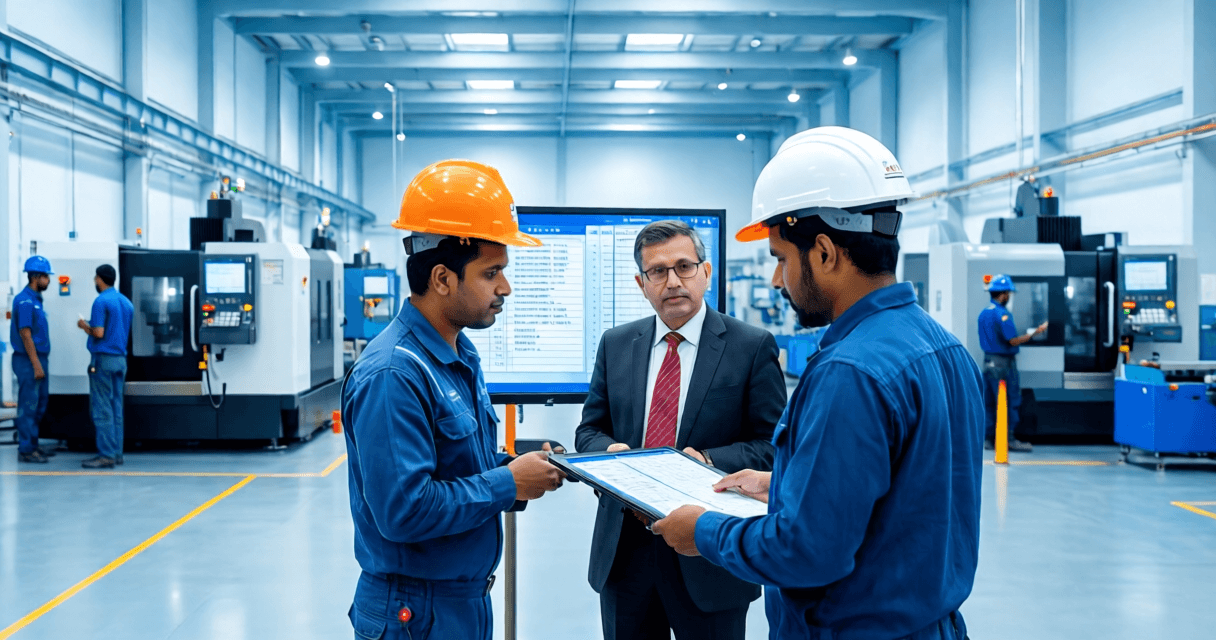
Relying solely on a physical service logbook offers insufficient proof of maintenance diligence in the age of digital compliance. Many established MSME factories operating across Hyderabad's industrial belt—including those near Balanagar or Patancheru—still maintain records using handwritten checklists and paper-based job cards. When an external auditor arrives, these scattered documents quickly create a "documentation gap," leaving critical records incomplete, illegible, or unverified regarding the actual parts used. A single missing signature, an undocumented diagnostic step, or discrepancies between the machine's last recorded run time and the service log can jeopardize entire certification statuses.
This documentation vulnerability is amplified by the reality of Indian manufacturing: frequent voltage fluctuations, intense dust ingress common in conveyor systems, and the sheer scale of operations that generate thousands of maintenance events annually. Traditional Annual Maintenance Contracts (AMCs) often structure services around calendar dates rather than actual machine usage or failure points. This reactive approach means paperwork merely records *that* something was done, but rarely details *why*, *how* it met OEM specifications, or which specific components were replaced.
The modern auditor demands an immutable service history. They require verifiable proof that maintenance meets international standards and directly mitigates risk. The current reliance on disparate paper trails fails this stringent test. Instead of a comprehensive chronological record compiled from multiple sources—the technician's notes, the parts supplier's invoice, and the internal manager’s sign-off—a facility presents a fragmented narrative. Addressing Industrial Machinery AMC Compliance Hyderabad requires moving beyond mere paperwork to establishing a verifiable, digital audit trail that tracks every movement of machinery component and expert intervention.
Beyond Repair: The Shift to Digital Compliance Logging
The transition from paper logs to advanced digital platforms represents the single greatest upgrade in industrial compliance management available today. This shift establishes a verifiable, living record of a machine’s operational life. Consider facilities near Cherlapally or Nacharam IDA that handle high volumes of packaging or textile processing; their continuous operation and certification status depend entirely on proving the integrity of every repaired line.
The MachineryFix platform excels by integrating advanced digital tools into the core repair process. The Digital Service Catalogue serves as its cornerstone, creating a permanent, chronological job card that logs everything: initial symptoms reported (Step 1), diagnostic findings recorded by an expert from the Vetted Technician Network, the specific OEM-grade parts sourced and replaced, the technical procedure executed, and the final approval.
When a facility uses the platform to book service—for instance, getting a hydraulic press serviced in the Jeedimetla Cluster—the entire process is tracked digitally. This means every component replacement automatically updates the machine’s master record, providing immediate, auditable proof of compliance. Furthermore, the ability for managers to compare proposals and select the best expert using competitive bidding ensures not only cost efficiency but also service quality transparency. The focus shifts from a subjective "I remember it being fixed" narrative to an objective, data-backed report that withstands global scrutiny.
For facility owners looking to future-proof operations, utilizing MachineryFix means maintenance records automatically become compliant assets—a significant advantage when bidding for contracts with multinational clients who mandate stringent quality controls and verifiable service histories. The industry moves from reactive fixing toward proactive, auditable compliance management.
> MSME factory owners across India use machineryfix.in to book experienced engineers and technicians with upfront pricing and digital job cards — all from a phone.
Critical Machinery Types Requiring Audit-Grade PM (CNC, Hydraulics, Compressors)
Certain machines pose higher compliance risks due to their complexity or critical role in safety, necessitating meticulous record-keeping. Among the most scrutinized types of equipment are CNC Machines, Industrial Hydraulic Presses, and Air/Gas Compressors. The documentation requirements for these three categories often exceed standard industry protocols, making them primary focus areas during any ISO audit review.
For CNC machines, compliance logging must detail not only tool changes but also calibration procedures, spindle run-time hours recorded against specific job batches, and the material certifications used in repairs. An auditor requires a clear link between the machine's operational parameters and its preventative maintenance schedule. For hydraulic systems, the focus shifts heavily toward fluid analysis records, pressure testing logs, and documentation of seal/pump replacement procedures using certified parts. Failure to log these details correctly can lead to assumptions regarding system integrity that are unacceptable in a quality audit environment.
Compressors present unique challenges due to their role in supporting entire factory air networks (e.g., for pneumatic tools or welding equipment). Compliance here demands meticulous tracking of oil analysis, filter changes, and efficiency testing logs linked to specific operational cycles. A failure to document the precise service interval proves maintenance was arbitrary rather than risk-based.
To manage these complex requirements effectively across different industrial clusters in Hyderabad—whether it is a textiles unit near Uppal or an engineering workshop in Kattedan—a generalized approach fails. The Digital Service Catalogue allows for machine-specific templates. If the job involves a CNC Lathe Machine, the platform prompts for spindle wear details and calibration checks; if it concerns a compressor, it requires oil pressure readings and filter model numbers. This granular data capture ensures that when an auditor asks, "Show me proof that this critical component was serviced to spec," you can immediately pull up a complete, verified digital job card backed by the platform's 4.8/5 average rating expertise.
Evaluating Your AMC Partner: 5 Non-Negotiable Checklist Items
Plant Managers selecting an Annual Maintenance Contract (AMC) provider—especially one responsible for maintaining ISO compliance—must evaluate them based on more than cost or speed of arrival. True value resides in their ability to guarantee auditable, verifiable service records and technical depth. Here are five non-negotiable checklist items every Plant Manager must verify before signing any agreement:
- Digital Documentation Output: Does the AMC provider use a platform that generates immutable digital job cards? Can these logs be easily exported and formatted for external audit review without manual intervention? Paper receipts or simple PDF summaries do not suffice.
- Technician Verification Depth: Are technicians merely tradesmen, or are they identity-verified experts with documented skill evaluations across specific machine types (e.g., certified hydraulic specialists)? The reliability of the service hinges on the expertise behind the job card.
- Parts Traceability and Sourcing: Does the AMC guarantee that all replacement parts are OEM-grade or equivalent, and critically, can they provide digital proof of sourcing and serial numbers for every major component replaced? This protects against substandard repairs that fail an audit.
- 24/7 Emergency Protocol Integration: A true AMC must include a structured, rapid response plan. The ability to get instant diagnosis and service matching—even at 2 AM during monsoon humidity disruptions—is essential. Checking the availability of immediate support via channels like WhatsApp +91 70133 33007 is vital for assessing readiness.
- Transparency in Billing and Service Scope: Does the contract offer a way to compare bids and understand exactly what labor, parts, and diagnostic time are included? Using features like competitive bidding ensures maximum value and minimum hidden costs, safeguarding both the bottom line and compliance status.
A comprehensive platform addressing these points is essential for securing true industrial reliability. Indian factory owners can book a certified technician directly from their phone, ensuring all service metrics—from initial diagnosis to final sign-off—are recorded on the official digital log.
Achieving ISO/Compliance Uptime with a Digital Platform Like MachineryFix
The goal of any successful AMC is not merely keeping machines running; it is achieving and maintaining compliance uptime. This means operating under continuous conditions that satisfy both operational demands and external regulatory requirements (like ISO 9001 or specific industry standards). A digital platform facilitates this by making maintenance proactive, predictable, and perfectly documented.
MachineryFix addresses compliance gaps through its entire workflow: first, the initial diagnosis is handled by a Vetted Technician Network expert using standardized diagnostic protocols; second, the repair process utilizes OEM-grade parts sourced and logged digitally; and third, the final output—the Digital Service Catalogue—serves as the gold standard proof. This structure transforms maintenance from an unpredictable cost center into a predictable, auditable operational function.
The Intelligent Dispatch Engine is key because it doesn’t just send *a* technician; it sends the *right*, certified expert closest to the breakdown location (be it in the Bollaram area or anywhere else in Telangana). This efficiency drastically reduces Mean Time To Repair (MTTR), which, in turn, minimizes unplanned downtime—the single greatest threat to both revenue and compliance status.
For long-term strategic planning, the Predictive Maintenance AMC feature allows analysis of historical data from service logs. Instead of waiting for a catastrophic failure to record a breakdown, the system suggests interventions *before* the component reaches its critical failure point. This shift from reactive repair to predictive servicing represents the ultimate method for ensuring continuous compliance and maximizing operational uptime. The platform's transparency—including weekly technician payouts with full visibility—builds trust and accountability into every service interaction.
Why MachineryFix Is India's Fastest Repair Network
For Plant Managers in Hyderabad, time equates directly to compliance risk. When a high-value machine breaks down in an industrial zone like Patancheru or Sanathnagar IDA, minutes count because every minute represents potential audit failure and significant financial loss. MachineryFix was built specifically to solve this pain point by integrating advanced technology with deep local expertise.
The operational model is engineered for speed and certainty: - Immediate Matching via the Intelligent Dispatch Engine: The algorithm does not guess; it instantly pinpoints the nearest, most skilled expert qualified for your specific machine type (CNC, Lathe, Hydraulic). - Verified Expertise: Every technician on the network undergoes rigorous identity checks and skill evaluations, ensuring that when a job card is signed off, the facility manager deals with an authorized professional. - Complete Transparency: From tracking the incoming expert to reviewing the final digital service log, every step of the process remains visible within the platform, providing absolute confidence to the facility management team.
By centralizing the entire repair ecosystem—from initial call to final sign-off and compliance logging—MachineryFix minimizes the variability inherent in traditional local repair markets. The company does not just fix machines; it restores audited operational continuity. If maintaining top-tier ISO certification while minimizing costly downtime is a priority, adopting a digitally managed service contract is required.
To ensure your facility remains 100% audit-ready and operational uptime is maximized, secure reliable technical support today by visiting Book a Technician or calling +91 70133 33007. Alternatively, click here to Book a Technician and let our verified experts handle your toughest industrial breakdowns instantly.
Published on
India's on-demand industrial repair platform — certified technicians dispatched fast.
Frequently Asked Questions
How do I get a technician for Industrial Machinery AMC Compliance Hyderabad in Hyderabad?
MachineryFix's Intelligent Dispatch Engine matches your breakdown with the nearest verified technician in Hyderabad. Available 24/7 for emergency support. Book at machineryfix.in or WhatsApp +91 70133 33007.
Are MachineryFix technicians verified and experienced?
Yes. Every technician on MachineryFix is an experienced engineer or technician, passing rigorous skill evaluation before being onboarded. This is why MachineryFix maintains a 4.8/5 average rating from factory clients across India.
What is a Predictive Maintenance AMC and how does it work?
A Predictive Maintenance AMC (Annual Maintenance Contract) from MachineryFix covers scheduled inspections, condition monitoring, and priority emergency response. It reduces unplanned breakdowns by 40-60% and is ideal for factories running critical CNC, hydraulic, or textile machines.
How much does industrial machine repair cost in India?
Cost depends on the machine, the fault and the parts required. MachineryFix uses competitive bidding — you receive upfront proposals from multiple local experts before committing, so you always get a fair price.
What documentation does MachineryFix provide after a repair?
MachineryFix generates a Digital Service Catalogue entry for every job — logging the fault, diagnosis, parts replaced, technician ID, and timestamps. This digital job card is accepted for ISO 9001 and GMP compliance audits.
Can I rehire the same technician for future jobs or an AMC?
Yes. MachineryFix's re-hiring feature lets you save a preferred technician directly to your account. You can rebook them for follow-up work, recurring maintenance, or a full AMC contract — keeping your factory history consistent.
Need a certified technician?
Get one dispatched fast.