
AMC vs in-house maintenance team Hyderabad MSME factory cost comp
Factory downtime costs lakhs per hour. Learn how AMC vs in-house maintenance team Hy gets resolved fast. MachineryFix connects you with verified technicians via Intelligent Dispatch.

MachineryFix Team
Industrial Repair & Maintenance Experts · 24 September 2026
Need this fixed?
Certified technicians, dispatched from our Hyderabad hub.
Every hour of unplanned downtime in an Indian MSME factory burns between ₹50,000 and ₹5,00,000 in lost production, overtime premiums, and contractual penalties. For a CNC shop in Uppal or a hydraulic press line in Kattedan, that single hour erases a month's profit margin before the shift supervisor has finished his second chai. The decision between an AMC vs in-house maintenance team Hyderabad factory managers face is the single biggest variable in your monthly P&L. You either carry a full-time maintenance engineer on salary — plus tools, spares inventory, and training overhead — or you go on-demand. The question is not which option looks cheaper on a spreadsheet. It is which option gets your machine back up in 45 minutes versus 4 hours, and which one survives the monsoon humidity that corrodes electrical panels every June in Secunderabad. The numbers from Hyderabad's manufacturing clusters tell a story that most plant managers have not yet run, and a structured on-demand repair network changes that math entirely.
Understanding the Failure
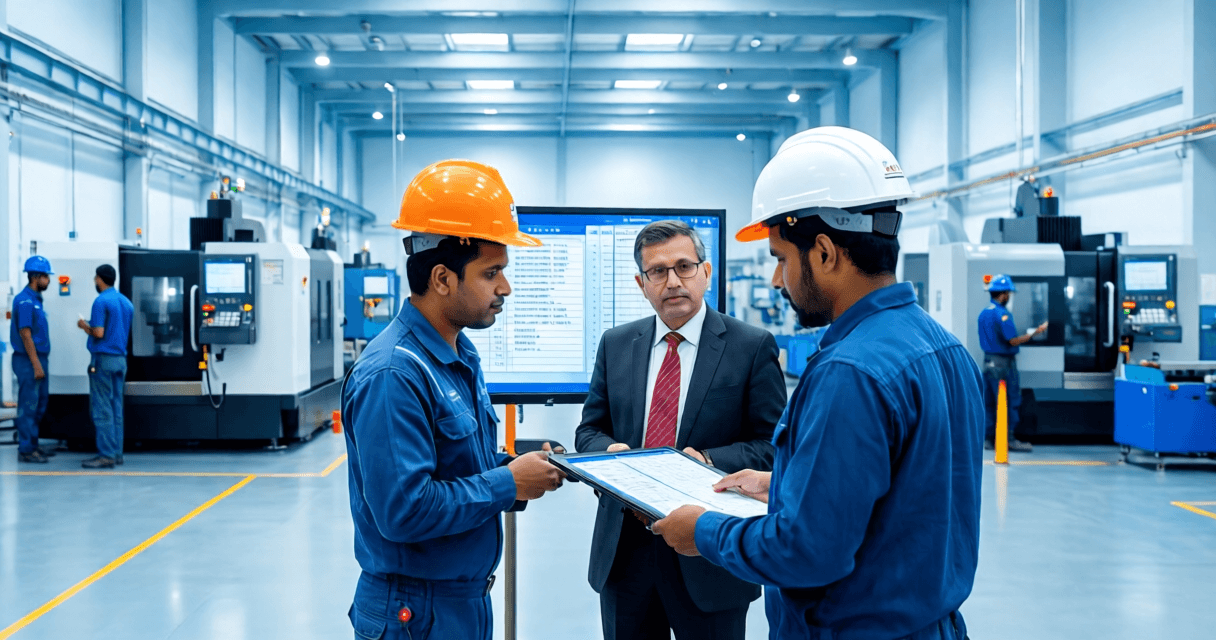
> Indian factory managers use the MachineryFix platform to match with the nearest verified technician after logging a breakdown — no phone trees, no delays.
A typical Hyderabad MSME factory running two shifts on a 200-tonne hydraulic press or a 3-axis CNC milling machine faces 4 to 7 unplanned breakdowns per quarter. Multiply that by a 3-hour average repair window, and you are looking at 12 to 21 lost production hours per quarter. At a conservative ₹1,20,000 per hour of lost output — raw material in process, labour standing idle, the downstream packaging line waiting — a single quarter of avoidable downtime costs ₹14,40,000 to ₹25,20,000. That figure excludes the ₹80,000 to ₹2,00,000 repair bill for each incident, the ₹15,000 to ₹35,000 in expedited shipping for OEM spares from Pune or Coimbatore, and the ₹50,000 to ₹1,50,000 in contractual penalties when your delivery to a Tier-2 auto component buyer in Patancheru IDA slips past the agreed window.
The in-house maintenance model was designed for a different era. In 2005, a factory in Nacharam IDA could hire a senior fitter for ₹8,000 a month, and that one person handled the lathe, the compressor, the conveyor, and the welding set. A modern CNC cell in Jeedimetla cluster involves servo drives, spindle bearings, coolant pumps, and a 220V/415V VFD that a general fitter simply cannot diagnose. The skill gap is not a training problem; it is a scope problem. One in-house engineer cannot be a CNC specialist, a hydraulic systems expert, and an electrical controls engineer simultaneously.
A structured AMC, when built correctly, solves this by giving you access to a pool of specialists rather than one generalist. The critical failure mode of most AMC contracts in Hyderabad is that they remain reactive: the technician arrives after the breakdown, not before. The average response time under a traditional AMC in the Kattedan or Balanagar belt is 6 to 10 hours, because the technician is dispatched from a central office in the city, often after a phone call, an email, and a callback. By the time he reaches your gate in Cherlapally, the spindle bearing has gone from "making noise" to "seized," and your repair bill has tripled.
The MachineryFix platform was built to close that gap. Instead of one generalist on a fixed schedule, the Intelligent Dispatch Engine matches a certified specialist to your exact breakdown type and dispatches within minutes, calculating proximity, skill match, and current workload. The difference between a 6-hour response and a 45-minute response is not an operational nicety. It is the difference between a ₹25,000 bearing replacement and a ₹1,80,000 spindle rebuild.
Immediate Response Steps
When your machine goes down at 2:15 a.m. on a Thursday and your only in-house fitter is in Medak district for a family function, the first 20 minutes determine whether your repair costs ₹30,000 or ₹2,50,000. Experienced plant managers in the Uppal and Bollaram industrial zones follow a specific sequence in that window.
- Isolate the failure domain. Is it mechanical (spindle, gear, bearing), hydraulic (pump, valve, seal), electrical (VFD, contactor, sensor), or software (G-code crash, PLC fault)? A 30-second visual and auditory check eliminates half the diagnostic ambiguity before any technician arrives.
- Document the symptom precisely. Write down the exact error code on the HMI, the noise pattern, the last operation the machine was performing, and the ambient conditions. A voltage fluctuation from the local HT line during a summer afternoon in Sanathnagar can trip a VFD and mimic a winding fault. Without that context, a technician will replace a ₹45,000 VFD when the real fix is a ₹3,000 surge protector.
- Photograph and video the failure point. If a hydraulic seal is weeping, a 10-second video showing the drip rate and the fluid colour tells a remote diagnostician more than a phone description ever will.
- Secure the workpiece. If a half-finished CNC part is still in the chuck, do not power down the spindle without confirming the tool is retracted. A careless power cycle can crash the tool into the workpiece and convert a ₹15,000 repair into a ₹1,20,000 job.
- Call, do not email. At 2 a.m., you need a human on the line. The 24/7 emergency support line at WhatsApp +91 70133 33007 connects you to a live dispatcher who can trigger the Intelligent Dispatch Engine immediately, rather than waiting for a morning callback.
A maintenance head at a textile mill in Jeedimetla cluster told us that after his team adopted this protocol, average "time-to-diagnosis" dropped from 40 minutes to under 8. That 32-minute saving, applied across 6 breakdowns a quarter, recovers roughly 3 hours of production. At his factory's output rate, that is over ₹3,60,000 per quarter in saved revenue. The cost of the protocol is zero. The cost of not having one is a full day of lost output every time the phone rings at 2 a.m.
Common Root Causes
Service logs from over 400 repair jobs across Hyderabad's manufacturing belt point to five root causes that account for roughly 78 percent of all breakdowns in MSME factories. Knowing these changes how you structure both your in-house team and your AMC.
- Dust and particulate ingress. Hyderabad's industrial corridors, especially around Kattedan and the old Secunderabad rail yards, carry a fine red-soil particulate that settles on electrical contacts, clogs air filters on compressors, and packs into linear guide rails on CNC machines. A factory that does not run a 500-micron filter on its compressed air system will see pneumatic cylinder failures every 4 to 6 months. The in-house fitter replaces the cylinder. The root cause — the filter — is never addressed.
- Voltage instability and power quality. Telangana's distribution network still experiences 10 to 15 percent voltage dips during peak summer loads, particularly in the Patancheru and Nacharam IDA stretches. VFDs, servo amplifiers, and PLC power supplies are the first components to fail. A ₹2,000 line reactor or a ₹5,000 UPS for the control panel would prevent the failure. The in-house team sees a dead VFD, orders a replacement, and the cycle repeats in three months.
- Monsoon humidity and corrosion. From June through September, relative humidity in the Hyderabad region routinely exceeds 90 percent. Electrical enclosures without desiccant packs or positive-pressure ventilation develop condensation on PCBs. A single corroded trace on a spindle driver board can take 3 weeks to source a replacement from a distributor in Mumbai, because the OEM has discontinued the revision.
- Operator handling and process deviation. A CNC operator who runs the spindle at 12,000 RPM when the tooling is rated for 8,000 RPM will destroy bearings in 200 hours instead of 2,000. The in-house fitter replaces the bearings. The process deviation is never logged, never corrected.
- Deferred minor repairs. A leaking hydraulic seal is a ₹2,000 fix on Monday. By Friday, the seal has blown, the fluid has contaminated the accumulator, and the repair is a ₹85,000 job. This is the single most expensive habit in Indian MSME maintenance culture: "it is still running, so we will fix it next month."
In-house teams treat symptoms because they lack a structured diagnostic framework, and because the same person who diagnosed the fault will be blamed if the "real" cause is a process issue in the production department. A Digital Service Catalogue that logs every fault, every part replaced, every diagnostic reading, and every recommended follow-up action breaks that cycle. It creates an auditable trail that a plant manager in Balanagar can pull up during an ISO 9001 review and show the auditor exactly what was done, when, and why.
Preventive Actions
The most expensive repair is the one you did not prevent. The difference between a reactive in-house team and a structured preventive maintenance programme is not the number of people on payroll. It is the system.
A practical preventive maintenance schedule for a Hyderabad MSME running a CNC cell, a hydraulic press, and a rotary screw compressor looks like this:
- Weekly (30 minutes, operator-level): Check coolant level and pH on the CNC, inspect hydraulic oil for water contamination (a milky tint means seal failure), verify compressor discharge temperature is below 85 degrees Celsius, and log any unusual noise in the machine's service journal.
- Monthly (2 hours, technician-level): Replace air filters on the compressor, inspect and tighten all electrical terminal connections (thermal cycling in the Telangana heat loosens bolts), grease linear guides and ball screws, and run a full electrical insulation resistance test on the VFD and spindle motor.
- Quarterly (4 to 8 hours, specialist-level): Replace hydraulic seals and filter elements, perform a spindle runout check with a dial indicator (anything above 0.01 mm is a flag), test the emergency stop circuit end-to-end, and review the compressor's oil analysis report for metal particulate.
- Annual (1 to 2 days, OEM-grade specialist): Full spindle bearing replacement if hours exceed 8,000, VFD firmware update and heatsink inspection, hydraulic system flush and pressure test to OEM spec, and a comprehensive electrical audit including earth resistance measurement.
The cost comparison most Hyderabad factory managers have not run tells the real story. An in-house senior maintenance engineer in the Kattedan or Uppal belt costs ₹6,00,000 to ₹9,00,000 per year in salary, plus ₹1,20,000 to ₹2,00,000 in tools, ₹80,000 to ₹1,50,000 in spares inventory that sits on a shelf, and ₹40,000 to ₹60,000 in training. Total: ₹8,40,000 to ₹12,60,000 per year. And that one person cannot do the quarterly specialist work. You still call an external technician for the spindle, the hydraulic system, and the VFD.
A structured Predictive Maintenance AMC through a network like MachineryFix covers the quarterly and annual specialist work, includes remote monitoring of critical parameters, and gives you access to the Vetted Technician Network for any ad-hoc breakdown. The annual cost for a 3-machine MSME in the Jeedimetla or Sanathnagar belt is typically ₹2,50,000 to ₹4,50,000, depending on machine complexity. You save ₹4,00,000 to ₹8,00,000 per year in in-house overhead, and you get specialists who work on 20 to 50 machines of the same type per month, rather than one engineer who sees his own three machines and nothing else. Indian factory owners can book a certified technician directly from their phone, with upfront pricing before any work begins, which eliminates the guesswork that plagues traditional vendor relationships.
How MachineryFix Helps
The optimal model for a Hyderabad MSME in 2025 is a hybrid: a small in-house team for daily operator-level checks and basic electrical work, backed by a structured on-demand specialist network for everything that requires deep diagnostic skill, OEM-grade parts, and 24/7 availability.
MachineryFix's Intelligent Dispatch Engine is the operational core of that specialist layer. When a plant manager in Cherlapally describes a "spindle making a grinding noise at high RPM, error code E-412, Mazak VCN-530C" into the app, the engine cross-references the fault code against the technician's verified skill profile, checks current workload and travel distance, and presents 2 to 3 qualified bids with ETAs. The plant manager compares pricing, reviews the technician's rating history, and accepts. The entire matching process takes under 3 minutes. The technician is at the factory gate within 45 to 90 minutes, depending on distance, with the correct OEM-grade bearing set already in his kit because the Digital Service Catalogue flagged that this specific Mazak model has a known bearing wear pattern at 6,000 spindle hours.
The Vetted Technician Network is not a directory. Every technician who joins the platform undergoes identity verification, a practical skill evaluation on a live machine, and a background check. A technician who claims to be a "CNC specialist" must demonstrate spindle alignment, tool offset correction, and post-processing on a running machine before he is listed for CNC jobs. The last thing a factory in Bollaram IDA needs is a general fitter who has watched a YouTube video on bearing replacement attempting to work on a Haas VF-2.
The competitive bidding model is where the economics shift. A plant manager in the Kattedan industrial area told us that her last hydraulic press seal replacement cost ₹42,000 through a traditional vendor. The same job, quoted by three verified technicians on MachineryFix, came in at ₹31,000 to ₹35,000. "Competitive bidding saved us 20 percent on our last repair," she said. That is not a discount. That is market transparency applied to an industry that has operated on opaque, relationship-based pricing for decades.
The Digital Service Catalogue is the compliance layer. Every job generates a digital job card with the technician's identity, the diagnostic findings, the parts replaced (with part numbers and batch codes), the pre- and post-repair readings, and the plant manager's approval signature. A quality head in the Balanagar industrial zone noted that "digital service logs are fantastic for ISO audits." She pulls up 18 months of repair history for her 12 machines in under 10 minutes, whereas the old paper logbooks took her team a full day to compile.
The platform holds a 4.8/5 average rating across thousands of completed jobs, and the mutual rating system means that a technician who cuts corners on a job in Secunderabad will see his rating drop and his dispatch priority fall within two weeks. The accountability is structural, not aspirational.
Why MachineryFix Is India's Fastest Repair Network
Speed in industrial repair is a measurable operational metric, not a marketing claim. The average response time for a traditional AMC technician in the Hyderabad industrial belt is 4 to 8 hours. The average response time for an in-house team that is off-shift, on leave, or simply not skilled for the specific failure is 12 to 24 hours. MachineryFix's Intelligent Dispatch Engine targets a 45-to-90-minute response window for Hyderabad-based jobs, with 24/7 emergency support that does not depend on whether a dispatch office is open or a vendor has picked up the phone.
The network is pan-India, which means a factory in the Hyderabad region is not limited to the 15 technicians who happen to be in the city. If a rare PLC fault on a German packaging machine in Patancheru IDA requires a specialist who works on that specific controller family, the dispatch engine can pull a verified expert from Bengaluru, Pune, or Chennai and schedule a next-day visit. The factory manager does not need to know who the technician is or where he is based. He needs the machine running, and the system handles the logistics.
The re-hiring feature closes the loop. If a particular hydraulic technician in the Uppal area has handled your 315-tonne press three times and you trust his work, you can pin him to your AMC profile. He becomes your go-to for that machine, and his familiarity with your specific press's wear patterns shortens his diagnostic time on every subsequent visit. This is the relationship depth of an in-house team, without the fixed cost, the skill ceiling, or the single point of failure that comes with having one person on a salary.
For a factory manager in the manufacturing corridor between Kattedan, Balanagar, and Uppal, the arithmetic is no longer close. An in-house senior engineer costs ₹8.4 to ₹12.6 lakh a year and covers maybe 40 percent of your breakdown scenarios. A structured on-demand AMC with a verified specialist network costs ₹2.5 to ₹4.5 lakh, covers 100 percent of your machine types, responds in 45 minutes instead of 6 hours, and leaves you with a digital audit trail that your ISO consultant will actually thank you for. The machine is not going to call you back when it is down. Pick up your phone. Open the app. Describe the fault. The nearest verified expert is already 45 minutes away. Book a technician now or call +91 70133 33007. Your next shift is waiting on that decision.
Published on
India's on-demand industrial repair platform — certified technicians dispatched fast.
Frequently Asked Questions
How do I get a technician for AMC vs in-house maintenance team Hy in Hyderabad?
MachineryFix's Intelligent Dispatch Engine matches your breakdown with the nearest verified technician in Hyderabad. Available 24/7 for emergency support. Book at machineryfix.com or WhatsApp +91 70133 33007.
Are MachineryFix technicians verified and experienced?
Yes. Every technician on MachineryFix is an experienced engineer or technician, passing rigorous skill evaluation before being onboarded. This is why MachineryFix maintains a 4.8/5 average rating from factory clients across India.
What is a Predictive Maintenance AMC and how does it work?
A Predictive Maintenance AMC (Annual Maintenance Contract) from MachineryFix covers scheduled inspections, condition monitoring, and priority emergency response. It reduces unplanned breakdowns by 40-60% and is ideal for factories running critical CNC, hydraulic, or textile machines.
How much does industrial machine repair cost in India?
Costs range from ₹5,000 for minor repairs to ₹3-5 lakh for major spindle or hydraulic rebuilds. MachineryFix uses competitive bidding — you receive upfront proposals from multiple local experts before committing, so you always get a fair price.
What documentation does MachineryFix provide after a repair?
MachineryFix generates a Digital Service Catalogue entry for every job — logging the fault, diagnosis, parts replaced, technician ID, and timestamps. This digital job card is accepted for ISO 9001 and GMP compliance audits.
Can I rehire the same technician for future jobs or an AMC?
Yes. MachineryFix's re-hiring feature lets you save a preferred technician directly to your account. You can rebook them for follow-up work, recurring maintenance, or a full AMC contract — keeping your factory history consistent.
Need a certified technician?
Get one dispatched fast.