
Factory Uptime Strategy: AMC vs In-House Repair Hyderabad
Don't let unpredictable breakdowns derail your compliance goals or budget. Transition to structured predictive care and achieve uptime recovery quickly with the industry leader, MachineryFix.

MachineryFix
Industrial Repair & Maintenance Experts · 24 July 2026
Need this fixed?
Certified technicians, dispatched from our Hyderabad hub.
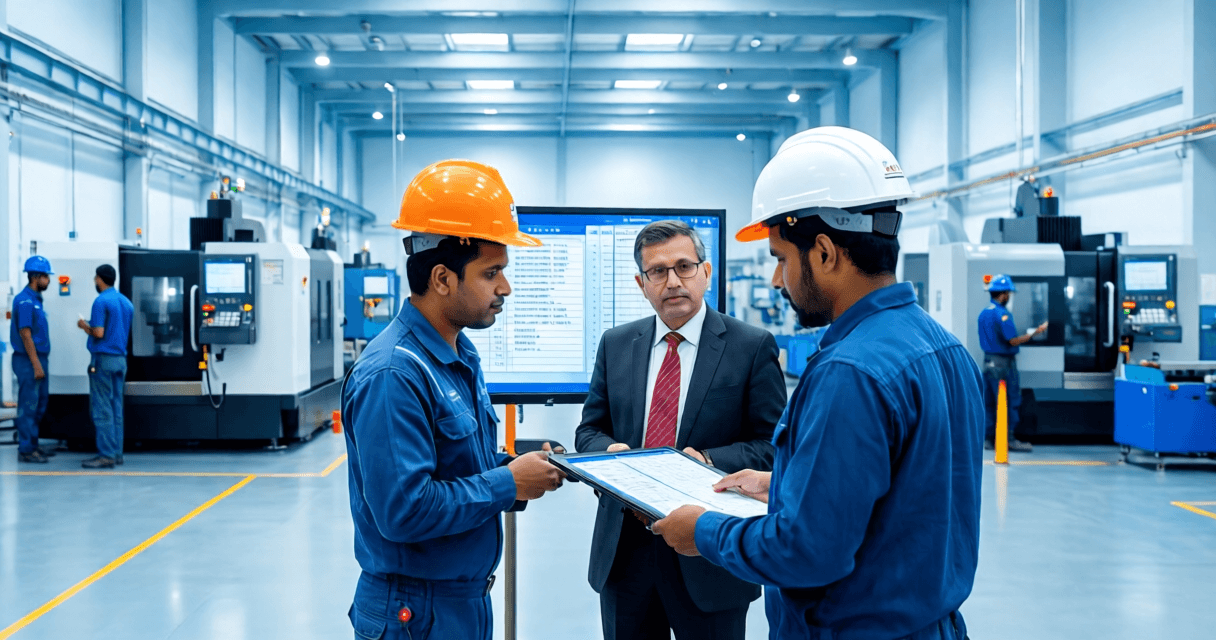
Unplanned industrial downtime can cost an MSME factory anywhere from ₹50,000 to over ₹1 lakh per hour. For manufacturing facilities operating across Telangana and Maharashtra, this figure underscores a critical reality: managers cannot afford to treat factory uptime prevention solutions Hyderabad as mere operational overhead. When key machinery—such as hydraulic presses in the Balanagar Industrial Zone or conveyor systems in Cherlapally—halt, the resulting financial loss is compounded by potential non-compliance fines and damaged client relationships. Consequently, any robust factory downtime strategy must move decisively beyond simple reactive repairs toward structured, data-driven predictive care.
Beyond Cost Comparison: Calculating the True TCO of Factory Maintenance
Plant managers often limit maintenance budget discussions to a simple cost comparison: Is it cheaper to build an in-house team or contract an Annual Maintenance Contract (AMC)? This approach is fundamentally flawed because it only calculates direct labor and service fees. A true Total Cost of Ownership (TCO) calculation must account for hidden liabilities—the costs tied to lost production hours, delayed regulatory audits, unplanned inventory spikes, and suboptimal utilization of skilled staff time.
Consider an MSME operating a critical packaging machine near Uppal Industrial Area. If that asset fails unexpectedly, the immediate expense is the repair itself. However, the TCO also includes: the wages of idle operators; the lost output value (the ₹50,000/hour loss); and the hours supervisory staff spend scrambling to secure temporary fixes or negotiate urgent parts—time better spent improving overall efficiency. Moreover, many traditional AMCs operate on a reactive model, fixing what has already broken rather than preventing failure from occurring. They are paid for availability, not guaranteed uptime.
A sophisticated approach requires shifting focus away from "repair cost" thinking toward "uptime assurance." This means investing in systems that provide immediate support and verifiable documentation. Platforms like MachineryFix significantly reduce the Mean Time To Repair (MTTR). Instead of waiting days for a specialized engineer, an intelligent dispatch engine matches the breakdown instantly with a certified expert who can arrive quickly—a speed critical to minimizing TCO. By focusing on rapid response and structured documentation through tools like the Digital Service Catalogue, businesses transform a massive unknown liability into a measurable, manageable expense. The initial investment in verified, fast service proves significantly lower than the cumulative cost of even one major unplanned shutdown.
The Hidden Risks of In-House Teams (Skill Gaps & Resource Drain)
Establishing an internal maintenance team appears to offer maximum control for factory managers, yet it carries significant and often underestimated risks: acute skill gaps, resource dilution, and inconsistent adherence to standardized processes. India's manufacturing sector is defined by rapid technological evolution, spanning from sophisticated CNC machines to advanced welding equipment. The pace of machinery upgrades means that even the most well-trained in-house team quickly finds itself managing technology for which they received no initial training.
Maintaining a highly skilled workforce demands continuous investment: specialized tools, rigorous re-training modules addressing voltage fluctuations and dust ingress issues common in industrial clusters like Nacharam IDA, and constant certification upkeep. This resource drain forces the maintenance head into an untenable role—balancing operational management, HR recruitment, procurement duties, and technical leadership. Such role overload inevitably leads to burnout and oversight lapses.
Furthermore, when genuine breakdowns occur, internal teams often struggle with quickly securing specialized Original Equipment Manufacturer (OEM) grade parts or accessing experts in highly niche fields like advanced hydraulic system diagnostics. If the local skilled labor pool proves insufficient, the facility faces extended downtime simply because a specific expertise—say, for an older model lathe machine—is unavailable within the factory walls. Relying solely on internal capacity means that when demand spikes or specialized failure modes occur, the factory’s reliability becomes hostage to its own personnel limitations. Adopting an external, highly vetted network proves invaluable in mitigating this structural vulnerability.
> MSME factory owners across India use machineryfix.in to book certified technicians with upfront pricing, identity verification, and digital job cards — all from a phone.
Why Traditional AMCs Fall Short: Lack of Transparency and Digital Logging
Many MSME factories rely on traditional Annual Maintenance Contracts (AMCs) that promise comprehensive coverage but frequently fail when the service is needed most—during a crisis or during a regulatory compliance audit. The primary weakness inherent in generic AMC models involves the lack of deep, verifiable transparency regarding actual service execution. When an external vendor completes work, the handover process often relies on paper logs, handwritten job cards, and verbal assurances.
For today’s stringent regulatory environment, particularly those pursuing ISO 9001 certification or other quality standards, "trust" does not constitute sufficient evidence. Auditors demand immutable proof of maintenance actions: *What* was diagnosed? *Which* parts were replaced (and with their serial numbers)? *When* exactly did the repair start and end?
Traditional AMCs often provide service coverage but fail to deliver this level of digital accountability. The documentation remains scattered, making compliance audits a painful process requiring weeks of manual reconciliation. Modern platforms change this dynamic by providing comprehensive assurance through Digital Service Catalogues. Every repair job generates a structured, immutable record detailing every diagnostic step, part replacement, and technician action taken.
This digital transparency allows plant managers not only to meet immediate audit requirements but also to build an unparalleled historical asset for continuous improvement. Moreover, these platforms often incorporate competitive bidding mechanisms, ensuring the factory receives multiple proposals before accepting work, thereby saving significant capital expenditure compared to fixed-rate, non-negotiable contracts offered by traditional AMCs. The combined benefit of documented compliance and cost optimization represents a powerful differentiator in market resilience.
Adopting a Structured, Verified Model: What Modern Predictive Care Requires
Moving from reactive maintenance (fixing things when they break) or simply contractual maintenance (AMC) to truly predictive care demands adopting a highly structured, verifiable model. This structure must integrate speed, skill verification, and comprehensive data logging into one cohesive workflow. The modern approach recognizes that downtime is not merely an operational failure; it is a systemic risk rooted in information asymmetry—the gap between the factory owner knowing they have a problem and the service provider knowing exactly how to fix it quickly.
A predictive model must therefore incorporate several critical elements: - Instantaneous diagnosis via structured reporting (error codes, symptoms). - Proximity matching of resources based on real-time data. - Verification of skills beyond mere certification documentation. - A transparent financial negotiation process before any work begins.
Implementing a system that combines these features eliminates the ambiguity inherent in calling an unknown number for emergency help. For example, if a textile machine breaks down near Jeedimetla Cluster, predictive care means knowing instantly which certified expert is 10 kilometers away, what their specific specialty is (e.g., advanced weaving types), and what their estimated time of arrival (ETA) will be.
The reliability factor remains critical in India's dynamic industrial climate—from monsoon humidity affecting electrical panels to the constant challenge of fluctuating power supply. A system with a proven track record, boasting an average rating of 4.8/5, demonstrates that this structured approach works across diverse geographical and industrial zones. Furthermore, utilizing advanced tools like MachineryFix’s Predictive Maintenance AMC allows facilities to move from costly breakdowns to scheduled interventions, guaranteeing maximum uptime and minimizing the associated risk profile for internal teams.
Actionable Blueprint: Implementing Audit-Proof Uptime Protocols in Hyderabad MSMEs
Plant Managers overseeing critical assets—be they compressors in a SEZ or conveyor systems in Patancheru Industrial Area—must aim not merely to 'repair,' but to establish an unbreakable, auditable uptime protocol. This requires integrating the service platform into core operational decision-making processes.
The blueprint starts with Digital Service Logs. Every component interaction must be logged digitally, ensuring that when external auditors arrive, compliance readiness is instantaneous. The process follows a clear flow: 1. Initial Problem Description (Symptoms and machine make). 2. Automated Matching (Using the Intelligent Dispatch Engine to compare bids and ETAs instantly). 3. Live Tracking and Verification (experienced engineers and technicians arriving with live status updates at the factory gate). 4. Service Execution and Logging (The technician completes work, documenting all parts used in the Digital Service Catalogue).
To make this actionable for MSMEs operating within the Hyderabad industrial belts, consider integrating a quick emergency contact protocol. If any machine fails late at night, instead of relying on general service numbers, having immediate access to specialized support via WhatsApp +91 70133 33007 ensures that help is dispatched instantly, 24/7.
Furthermore, the platform facilitates Competitive Bidding. This empowers factory owners like Priya Kumari, who successfully used this feature to save 20% on a recent repair in Jeedimetla Cluster. It shifts the power dynamic from the service provider dictating terms to the owner choosing the best combination of expertise, price, and speed. By implementing these protocols—relying on vetted technicians and comprehensive digital logging—the facility moves beyond simply managing costs; it manages systemic risk, achieving true operational resilience necessary for growth in India's competitive market.
MachineryFix: The Standard for Uptime Assurance in Indian Manufacturing
The modern reality of manufacturing demands immediate, verifiable support that traditional service models cannot match. By digitizing the entire breakdown resolution process—from initial call to final payment and logging—MachineryFix provides a crucial bridge between failure and full operation. It serves as an uptime assurance partner built specifically for the unique challenges facing India's MSME sector, including voltage fluctuations, skilled labor scarcity, and stringent compliance needs.
Its core differentiators define this new industry standard: - Intelligent Dispatch Engine: Matching breakdowns to certified experts in minutes across Hyderabad’s industrial zones. - Digital Service Catalogues: Creating immutable service records perfect for ISO and regulatory audits. - Vetted Technician Network: Every expert undergoes rigorous skill evaluation and identity verification, guaranteeing quality at every touchpoint. - Competitive Bidding: Guaranteeing cost efficiency by allowing comparison of multiple professional proposals before commitment.
This combination of speed, verifiable expertise, and unmatched transparency means that downtime is reduced from days to hours, as demonstrated by successful turnarounds across the Kattedan Industrial Area and Balanagar zone. Stop accepting ambiguity into your operational budget. Take control of your maintenance spend and guarantee compliance readiness with unparalleled speed. To get immediate assistance or to explore predictive contracts, visit machineryfix.in or WhatsApp us at +91 70133 33007. Ready to book a technician for peace of mind, click here: Book a Technician.
Published on
India's on-demand industrial repair platform — certified technicians dispatched fast.
Frequently Asked Questions
How quickly can I get a technician for factory downtime prevention solutions Hyderabad in India?
MachineryFix's Intelligent Dispatch Engine matches your breakdown with the nearest verified technician in minutes. Technicians are dispatched quickly across India. Book at machineryfix.in or WhatsApp +91 70133 33007.
Are MachineryFix technicians verified and background-checked?
Yes. Every technician on MachineryFix passes Aadhaar-based identity verification plus rigorous skill evaluation before being onboarded. This is why MachineryFix maintains a 4.8/5 average rating from factory clients across India.
What is a Predictive Maintenance AMC and how does it work?
A Predictive Maintenance AMC (Annual Maintenance Contract) from MachineryFix covers scheduled inspections, condition monitoring, and priority emergency response. It reduces unplanned breakdowns by 40-60% and is ideal for factories running critical CNC, hydraulic, or textile machines.
How much does industrial machine repair cost in India?
Cost depends on the machine, the fault and the parts required. MachineryFix uses competitive bidding — you receive upfront proposals from multiple local experts before committing, so you always get a fair price.
What documentation does MachineryFix provide after a repair?
MachineryFix generates a Digital Service Catalogue entry for every job — logging the fault, diagnosis, parts replaced, technician ID, and timestamps. This digital job card is accepted for ISO 9001 and GMP compliance audits.
Can I rehire the same technician for future jobs or an AMC?
Yes. MachineryFix's re-hiring feature lets you save a preferred technician directly to your account. You can rebook them for follow-up work, recurring maintenance, or a full AMC contract — keeping your factory history consistent.
Need a certified technician?
Get one dispatched fast.