
Hyderabad Manufacturing: AMC vs In-House Maintenance Strategy
Stop comparing mere costs and start calculating the Total Cost of Ownership (TCO) for your factory floor. Discover how MachineryFix's 24/7 emergency support and digital logs eliminate downtime risk instantly.

MachineryFix
Industrial Repair & Maintenance Experts · 9 September 2026
Need this fixed?
Certified technicians, dispatched from our Hyderabad hub.
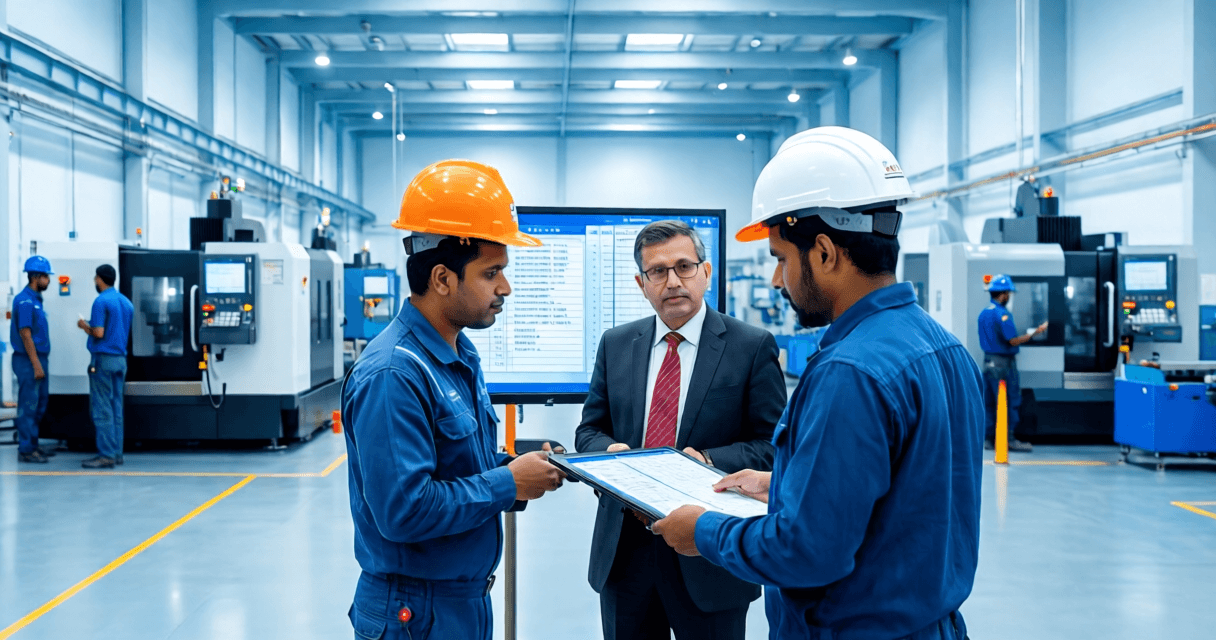
The cost of unscheduled downtime in India can rapidly spiral, easily hitting ₹50,000 to over ₹5 lakh per hour depending on the machinery and process line. For any factory owner operating within the industrial hubs of Hyderabad—be it Uppal Industrial Area or specialized zones like Kattedan—understanding the true operational cost of maintenance demands more than calculating labor wages; it requires assessing systemic risk, compliance gaps, and access to niche specialization. The choice between a full Annual Maintenance Contract (AMC) and building an entirely in-house repair crew does not simply determine budget allocation—it dictates core operational resilience. A comprehensive Industrial maintenance TCO analysis Hyderabad must view the entire lifecycle of machine uptime.
The TCO Breakdown: Beyond Salaries – Calculating True Maintenance Cost
> Indian factory managers use the MachineryFix platform to match with the nearest verified technician after logging a breakdown — no phone trees, no delays.
Calculating a Total Cost of Ownership (TCO) requires Plant Managers to look past fixed costs like salaries, benefits, tools, and spare parts inventory. While these inputs remain necessary, they represent only about 40% of the total operational expenditure. The remaining percentage—and often the most volatile component—is the hidden cost associated with production stoppage.
The TCO calculation must account for several compounding factors unique to the Indian MSME environment: - Opportunity Cost: This is the immediate and quantifiable revenue lost during any machine stoppage. - Labor Bottleneck Cost: If a critical breakdown occurs, such as on a high-capacity Lathe Machine in an industrial cluster like Jeedimetla, and your internal team lacks specialized knowledge (for example, advanced CNC programming or specific hydraulic cylinder repair), the delay cost rapidly escalates. Staff wait for external experts, multiplying the hourly loss far beyond the initial repair bill. - Diagnostic Delay Cost: Many seemingly small repairs escalate into major overhauls because the initial diagnosis was incomplete. An internal team might identify a failing motor bearing but miss the underlying root cause—perhaps electrical surge damage or contamination in lubrication lines—leading to repeated failures and wasted time.
Machinery complexity increases faster than local technical training can adapt across Hyderabad's diverse manufacturing landscape, from packaging units in Balanagar to textile machines at VNR Textiles. A full-time internal crew offers perceived control but carries the immense burden of perpetually needing niche expertise (like advanced welding for high-pressure vessels or specific PLC troubleshooting). Their true value diminishes significantly when facing a rare breakdown demanding OEM-level specialization.
The optimal strategy, therefore, shifts focus from simple cost minimization to robust risk mitigation. Platforms like MachineryFix address this TCO gap by making specialized expertise available on demand. Instead of maintaining expensive internal staff who remain underutilized most of the year, a factory accesses a Vetted Technician Network that guarantees certified skill levels and immediate dispatch. This competitive bidding model allows managers to compare proposals and save significant capital compared to locked-in, inflexible AMC rates.
Operational Risk Analysis: When In-House Teams Struggle (Specialization Gap)
The single greatest operational risk confronting MSME factories across the Hyderabad region is not mechanical failure itself, but the persistent specialization gap within internal maintenance teams. Many factory owners mistakenly assume that a few mechanically inclined employees suffice for modern operations. However, today’s industrial machinery—be it advanced hydraulic presses or multi-axis CNC machines—operates on deeply integrated systems involving pneumatics, high-voltage electrical controls (PLC), and proprietary software interfaces.
Consider the reality in the Jeedimetla Cluster: A Conveyor System suddenly halts production. An internal team might correctly diagnose a physical jam point, but if they cannot interpret complex error codes displayed on the PLC panel or locate specific expertise for repairing an indexing motor, the repair stalls. This gap wastes hours and costs tens of thousands of rupees in lost output.
Furthermore, relying solely on local labor exposes the factory to systemic vulnerabilities: - Skill Drift: Specialized technical skills fade over time without continuous, structured training that matches modern machine requirements. - Resource Constraints: When a critical component failure requires an obscure part or unique diagnostic tool (such as advanced vibration analysis equipment), the internal team lacks both the resources and the network to procure it quickly. - Scale of Response: During times of crisis—like simultaneous breakdowns across multiple production lines during peak hours—an in-house team is inherently limited by manpower, tools, and immediate availability.
The solution demands a structured external resource pool that offers more than just labor; it guarantees verifiable expertise. MachineryFix solves this challenge using its Intelligent Dispatch Engine. This algorithm does not simply send the nearest technician; it matches the specific breakdown (e.g., "Hydraulic Press, Model X, Error Code 407") with the most certified and relevant expert available in that geographic area. The result is immediate diagnosis and minimized downtime—a measurable reduction in TCO.
> MSME factory owners across India use machineryfix.in to book experienced engineers and technicians with upfront pricing and digital job cards — all from a phone.
Compliance & Audit Proof: Why Digital Service Logs are Non-Negotiable for Modern Factories
Compliance and audit readiness constitute core operational requirements in today's highly regulated manufacturing environment; they are no longer optional additions. Preparing for ISO certifications, bank audits, or internal process reviews requires the ability to prove that machinery maintained according to global best practices. This elevates maintenance from a mere cost center to a verifiable asset management function.
Traditional physical repair logs—notebooks filled with handwritten notes and receipts—prove notoriously unreliable, prone to loss, illegibility, or selective omission. They fail the modern standard of digital traceability required by industry bodies. A Plant Manager at an MSME unit in Patancheru needs more than proof that a part was replaced; they need full documentation detailing: - The original symptoms reported (Step 1). - The precise diagnostic steps taken by the expert. - The make and model of replacement parts, including associated serial numbers. - The specific procedure followed to restore function.
The Digital Service Catalogue offered by MachineryFix revolutionizes Indian compliance management. Every job card generated through the platform creates a comprehensive, tamper-proof digital record. When Anita Desai in Cherlapally discussed using these logs for ISO audits, she described an immediate, verifiable audit trail spanning years and multiple technicians.
This documentation is centrally managed and automatically archived, vastly reducing the human error factor inherent in paper systems. Moreover, the Mutual Rating System provides transparency not only on service quality but also on adherence to process—ensuring accountability from both sides of the transaction. For auditors, having a clear record showing that an external expert was dispatched via a verifiable system, and their work approved digitally (Step 4), adds layers of assurance impossible with manual processes.
Future-Proofing Uptime: The Shift from Reactive Repair to Predictive Partnership
Advanced manufacturing aims for zero unplanned downtime—a state achieved not through sheer labor volume, but through intelligent anticipation. This transition shifts the focus from reactive repair (waiting for the breakdown) to adopting a proactive, predictive maintenance model.
Traditional AMCs often fail here because they are designed around *scheduled* interventions based on generalized time intervals ("Check this every six months"). Predictive Maintenance, however, uses real-time sensor input—such as vibration analysis, temperature monitoring, or oil particle counts—to forecast failure weeks or even months in advance.
Achieving this predictive state requires a reliable partner who can integrate specialized diagnostic services into routine operations without massive capital investment. This forms the core value proposition of the Predictive Maintenance AMC available through platforms like MachineryFix. It structures an annual contract that extends beyond simple oil changes; it guarantees access to highly skilled engineers capable of analyzing complex telemetry data and providing actionable insights *before* failure occurs.
For a company in Nacharam IDA, knowing that a critical compressor bearing will fail due to specific vibration patterns three weeks from now allows the manager to schedule downtime during a planned lull, rather than dealing with an emergency shutdown at 2 PM on a Monday morning. This ability to 'buy time' and 'plan maintenance windows' drastically improves overall operational efficiency. The platform helps managers re-hire their favorite technicians for these ongoing AMCs, building trust and continuity difficult to replicate in the fluid labor market.
Action Plan: Building a Hybrid Maintenance Model for Maximum ROI in Hyderabad
Any thorough Industrial maintenance TCO analysis Hyderabad must conclude that the optimal approach is rarely 100% internal or 100% outsourced; it is optimally *hybrid*. The goal involves building an operational model that retains institutional knowledge and control (the 'in-house' element) while outsourcing specialized, high-risk tasks to a verified expert network (the 'external' element).
This hybrid strategy successfully leverages the strengths of both sides: 1. Internal Core Team: Focuses on Level 1 maintenance—daily checks, routine cleaning, minor adjustments, basic troubleshooting, and monitoring local machinery health (e.g., keeping the facility running smoothly every day). This minimizes immediate labor cost. 2. External Specialized Network: Functions as the 'Tier 3' escalation point. When a problem exceeds the internal team’s scope—when specialized PLC programming is needed, or a rare hydraulic component requires OEM-grade diagnosis—the system immediately activates an expert dispatch using tools like MachineryFix’s Intelligent Dispatch Engine.
This model provides maximum Return on Investment (ROI) because: - It prevents over-staffing your core team with expensive niche experts who are rarely called upon. - It ensures that when catastrophic failure occurs, you do not waste critical hours attempting to solve it internally; immediate, verified support arrives instead. - The entire process is managed through digital tools, providing full accountability and perfect records for compliance audits (as confirmed by the platform's average rating of 4.8/5).
To implement this hybrid model effectively in any industrial cluster—be it Uppal or Bollaram—managers must first map their current risks: Identify the top three machines whose failure would halt production and whose repair requires expertise they do not possess internally. These are immediate targets for integrating specialized external support via a trusted platform. To take the first step, managers can visit MachineryFix’s website to understand current market rates and service availability before committing to any annual contract.
Why MachineryFix Is India's Fastest Repair Network
The operational reality for MSME factories in Hyderabad demands speed, trust, and verified expertise—qualities difficult to guarantee through traditional methods. MachineryFix built itself specifically to eliminate the time gap between breakdown and resolution. We understand that when your factory floor stops moving, every minute translates directly into lost revenue, impacting everything from cash flow to quarterly targets.
Our solution integrates four critical components: - Intelligent Dispatch Engine: This proprietary algorithm is the core of our speed promise. It eliminates guesswork by matching complex machine breakdowns with the nearest available certified expert instantly. There are no delays in triage or resource allocation. - Vetted Technician Network: Our commitment to quality remains non-negotiable. Every engineer and technician undergoes rigorous identity checks, skill evaluations, and performance reviews before joining our network. This ensures that when a specialist arrives at your plant—whether for CNC machines or welding equipment—they are not just skilled but fully reliable. - Digital Service Catalogue: We provide complete transparency. From the initial problem description (Step 1) to the final sign-off and payment (Step 4), every action is logged digitally, creating a perfect audit trail that satisfies stringent modern industry standards like ISO. - Competitive Bidding & Transparency: Unlike locked-in contracts, our platform allows you to compare proposals before accepting work. This crucial layer of competitive bidding optimizes your repair costs, saving significant capital while maintaining world-class service levels.
MachineryFix functions as the ultimate operational insurance policy for Indian industry. We do not simply fix machines; we restore continuity and mitigate systemic risk. To experience the difference that verified expertise and intelligent dispatch can make to your bottom line, book a technician immediately at Book a Technician or call us on WhatsApp at +91 70133 33007 for emergency support.
Published on
India's on-demand industrial repair platform — certified technicians dispatched fast.
Frequently Asked Questions
How do I get a technician for Industrial maintenance TCO analysis Hyderabad in Hyderabad?
MachineryFix's Intelligent Dispatch Engine matches your breakdown with the nearest verified technician in Hyderabad. Available 24/7 for emergency support. Book at machineryfix.in or WhatsApp +91 70133 33007.
Are MachineryFix technicians verified and experienced?
Yes. Every technician on MachineryFix is an experienced engineer or technician, passing rigorous skill evaluation before being onboarded. This is why MachineryFix maintains a 4.8/5 average rating from factory clients across India.
What is a Predictive Maintenance AMC and how does it work?
A Predictive Maintenance AMC (Annual Maintenance Contract) from MachineryFix covers scheduled inspections, condition monitoring, and priority emergency response. It reduces unplanned breakdowns by 40-60% and is ideal for factories running critical CNC, hydraulic, or textile machines.
How much does industrial machine repair cost in India?
Cost depends on the machine, the fault and the parts required. MachineryFix uses competitive bidding — you receive upfront proposals from multiple local experts before committing, so you always get a fair price.
What documentation does MachineryFix provide after a repair?
MachineryFix generates a Digital Service Catalogue entry for every job — logging the fault, diagnosis, parts replaced, technician ID, and timestamps. This digital job card is accepted for ISO 9001 and GMP compliance audits.
Can I rehire the same technician for future jobs or an AMC?
Yes. MachineryFix's re-hiring feature lets you save a preferred technician directly to your account. You can rebook them for follow-up work, recurring maintenance, or a full AMC contract — keeping your factory history consistent.
Need a certified technician?
Get one dispatched fast.