On-Demand vs Breakdown: MSME Factory Machinery Repair
Machine stopped mid-shift? The article covers causes, what to check before calling, and how on-demand vs breakdown repair differs for MSME factory machinery repair India. ID-checked technicians, 1 to 12 month warranty. Call 24/7: +91 70133 33007.

MachineryFix
Industrial Repair & Maintenance Experts · 1 July 2026
Need this fixed?
Experienced technicians, from our Hyderabad hub.
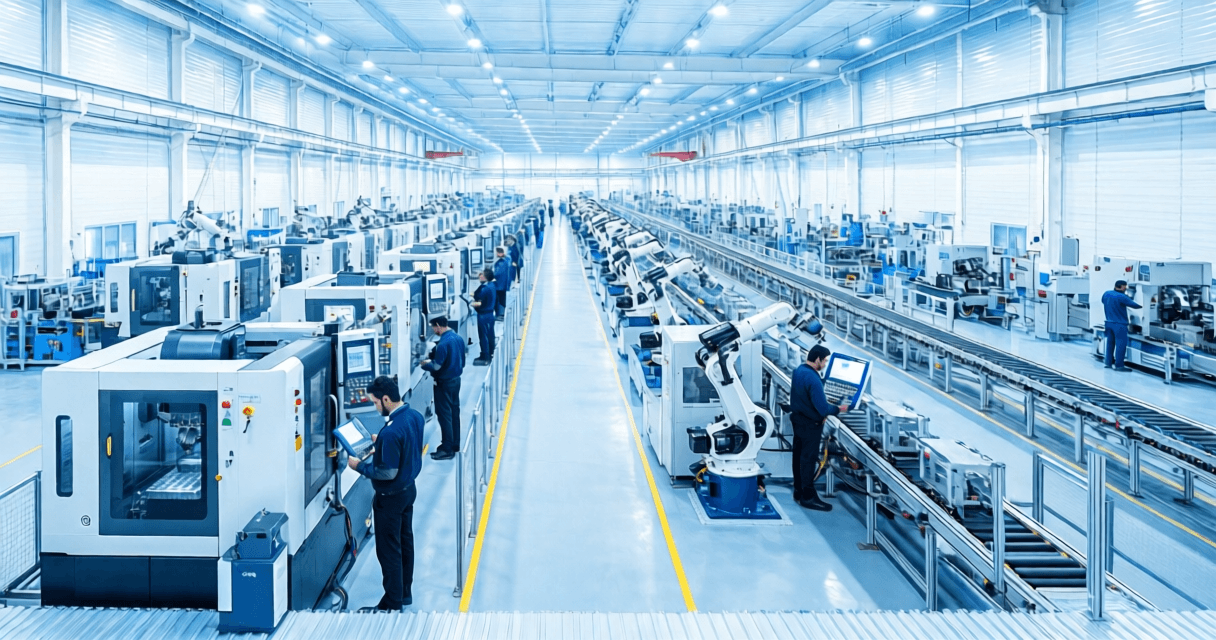
Losing production in an MSME factory today costs anywhere from ₹50,000 to over ₹5 lakh per hour. For Indian manufacturers operating on razor-thin margins—from the textile units of Ludhiana to the CNC clusters of Ambattur Chennai—this statistic represents more than just a cost estimate. It signifies missed deadlines, strained working capital, and the immediate threat of operational shutdown. When a critical piece of equipment fails, the distinction between a manageable setback and a catastrophic disaster hinges entirely on response time. Given the acute need for reliable MSME factory machinery repair India, facility managers must understand the fundamental shift required: moving from slow, reactive breakdown service to proactive, digitally managed industrial support.
Understanding the Machinery Breakdown Cycle: The Cost of Waiting
In any MSME setting—be it a bustling unit in the Ambattur Chennai MIDC or a specialized cluster in Gujarat—machinery downtime transcends mere inconvenience; it becomes a multi-layered financial crisis. When a CNC machine stalls due to a hydraulic failure, the costs multiply rapidly: lost direct production revenue, wasted labor hours waiting for diagnosis, penalties from downstream clients, and the escalating cost of emergency logistics required to source specialized parts. Traditional breakdown service models often prove insufficient because they treat localized symptoms rather than addressing systemic operational failures. They typically rely on generalized networks that take days to mobilize resources, leaving valuable output time stranded indefinitely.
The modern manufacturing environment demands immediate precision in every repair cycle. A typical failure sequence involves: 1) Failure detection; 2) Diagnosis (often delayed by poor information flow); 3) Mobilization of specialized resources; and 4) Repair execution. The critical bottleneck nearly always occurs between steps two and three—the diagnosis and mobilization phase. Furthermore, many MSME facilities face unique operational challenges that severely exacerbate downtime: erratic power supply due to voltage fluctuations common in Tier-2 industrial zones, dust ingress from the surrounding environment, or simply a lack of readily accessible expertise for niche machinery like high-tonnage hydraulic presses or advanced packaging lines used in food processing units.
Successful operations are rapidly adopting platforms that offer instant diagnostic and resource matching capabilities. These systems do not merely promise access to a technician; they guarantee immediate connection with experienced and vetted experts who possess proven, certified skill sets across diverse industrial sectors. This transition from slow, reactive breakdown servicing to controlled, on-demand support is the defining factor between continuous operational flow and costly stagnation. To mitigate this inherent risk, facility managers must move beyond simply calling for help; they must adopt predictive platforms that structure the entire repair process digitally.
Navigating Immediate Response: From Panic to Protocol
When an error code flashes or a critical machine component gives way—whether it is a conveyor system jamming in a food processing unit near Hyderabad or a lathe machine losing feed pressure in a metal fabrication shop—the initial reaction must be disciplined, not panicked. The first few minutes are the most valuable window for minimizing physical damage and maximizing speed of recovery. An effective immediate response protocol requires facility managers to implement four key actions immediately:
- Isolate the Hazard: Before initiating any external call, ensure the area is safe and attempt a controlled power down of affected components to prevent secondary failures or injury among personnel.
- Gather Data Points (The 'Symptoms'): Do not simply report "it stopped working." Record the machine's precise make and model, the exact location of the failure point, any flashing error codes (e.g., E402), and a detailed description of what was happening immediately before the breakdown occurred. This granular data is essential for accurate diagnosis.
- Activate Digital Coordination: In a modern setup, this means bypassing traditional phone calls to an organized digital platform. A system capable of instantly cross-referencing your machine's fault code against historical service records provides invaluable context. Platforms like MachineryFix provide access to comprehensive Digital Service Catalogues, giving the arriving technician immediate background on past repairs and common failure points for that specific asset.
- Demand Transparency: Any expert arriving must be verifiable through multiple checks. The most reliable platforms ensure identity verification at the factory gate, providing essential peace of mind in a highly complex industrial setting.
If your current breakdown procedure relies solely on calling the first number you remember, your operation is hemorrhaging money and time. You require an organized system that can provide multiple expert bids and estimated time of arrival (ETAs) simultaneously, enabling you to select the fastest, most cost-effective professional—a core feature provided through competitive bidding platforms.
Common Root Causes: Why Machines Really Fail in India’s MSME Sector
A breakdown often appears as a sudden mechanical failure, yet the root cause is frequently systemic, environmental, or procedural. Understanding these underlying issues allows maintenance teams to shift their focus from mere repair (the 'fix') to genuine prevention (the 'solve'). In the unique industrial landscape of India—with its diverse geographical clusters and varying infrastructure quality—certain causes are disproportionately common:
- Environmental Degradation: Dust ingress, particularly in textile or machining units located near open industrial belts, is notorious. Fine metallic dust mixed with high humidity acts as a powerful abrasive, accelerating wear on bearings, gears, and seals far faster than designed specifications allow. Monsoon humidity can corrode sensitive electrical contacts and wiring harnesses, leading to intermittent, difficult-to-trace faults.
- Power Quality Issues: Consistent voltage fluctuations are an operational reality across most industrial areas outside major metros. These surges and dips stress motors and sensitive electronic control units (PLCs), often causing premature failure that appears unrelated to the actual power grid issue itself.
- Operator Error/Procedural Drift: This remains one of the most overlooked causes. Changes in production speed, loading heavier material than specified by design parameters, or bypassing established safety protocols can induce stress fractures and overloads on machinery components.
- Wear & Tear Management: Many MSMEs operate under perpetual cost constraints, leading to deferred maintenance—replacing a part only when it completely breaks down, rather than scheduling its replacement during optimal service intervals based on usage data.
The shift towards preventative care is not optional; it is mandatory for survival. The goal extends beyond simply getting the machine running again; it involves ensuring that the asset *remains* operational reliably for years to come. This necessity drives the increasing demand for structured Annual Maintenance Contracts (AMCs).
Predictive Action vs. Reactive Repair: Embracing Proactive Maintenance
Reactive maintenance—waiting until a machine breaks down and then scrambling for help—is fundamentally an expensive gamble characterized by high costs, unpredictable downtime, and severe stress on cash flow. Conversely, Predictive Maintenance AMC shifts the focus entirely. Instead of fixing what is broken, the strategy involves accurately forecasting *what will* break and scheduling intervention before failure ever occurs.
A plant manager implements this shift by systematically leveraging data and specialized engineering expertise. Modern predictive systems integrate several layers:
1. Condition Monitoring: Using IoT sensors on critical assets (like compressors or hydraulic pumps) to monitor vibration levels, temperature gradients, oil quality, and electrical current draw in real-time, providing early warnings of material stress. 2. Historical Data Analysis: Utilizing the Digital Service Catalogues. These records are far more than just invoices; they are cumulative data points showing component lifecycles for your specific machine model at your facility (e.g., "This brand of bearing typically lasts 18 months under these operating conditions in this industrial zone"). 3. Expert Consultation: Engaging with service providers who bring not only tools, but deep engineering knowledge. These experts can interpret the sensor data and recommend precise interventions—be it flushing a circuit, adjusting torque settings, or pre-emptively replacing a high-wear component based on predictive modeling.
For instance, instead of waiting for the hydraulic press (used in industrial clusters like Uppal) to seize up due to cavitation, a predictive AMC would flag abnormal oil particle counts months in advance. This allows only a scheduled fluid change and filter replacement—preventing massive downtime entirely and protecting revenue streams. By adopting this proactive stance, facility management transforms maintenance from being an unpredictable cost center into a critical unit for revenue protection.
Related Services
Related Reading
- on-demand machinery repair vs contract service Hyderabad factory
- competitive bidding machinery repair India cost savings factory
- bulk drug pharma machinery repair Patancheru IDA Telangana
- textile garment machinery repair Sanathnagar Hyderabad export uni
- automotive press shop machinery repair Balanagar Hyderabad tier 2
How MachineryFix Delivers Speed, Trust, and Transparency
The market is saturated with general "repair services," but few deliver the combination of speed, verified expertise, and technological transparency that Indian MSMEs require to remain competitive. This persistent gap between service promise and reliable execution is precisely where MachineryFix has established itself as a dedicated digital solution tailored for India’s industrial belt.
The core differentiator lies in its robust technological architecture:
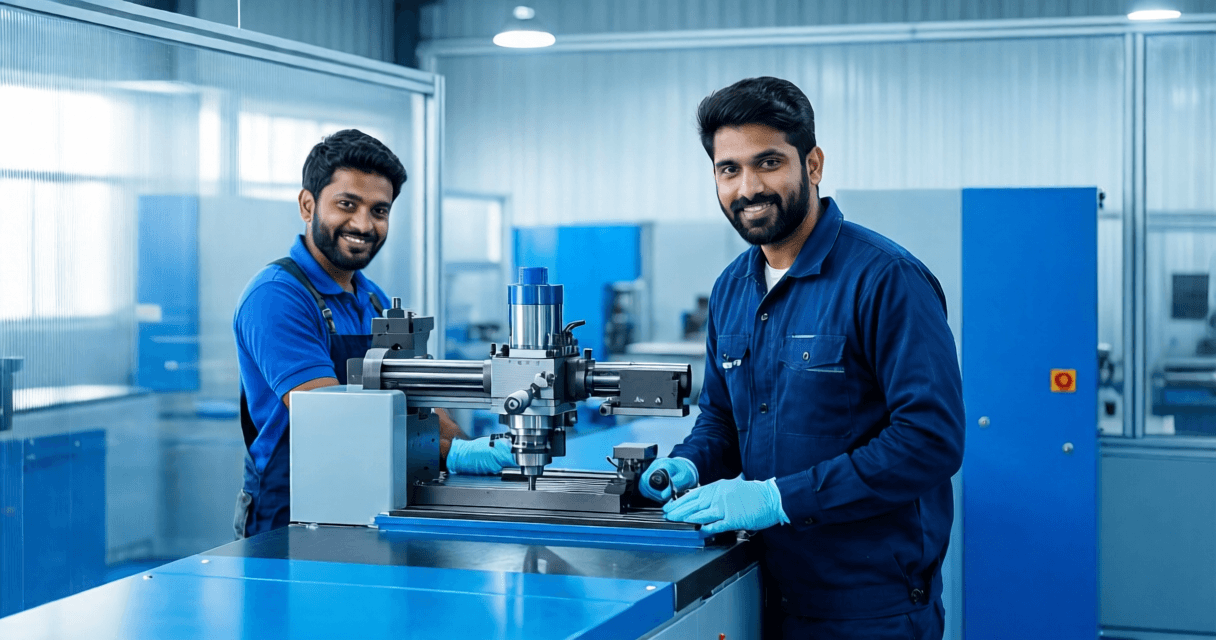
1. Intelligent Dispatch Engine: This system goes beyond simple GPS tracking; it is an algorithm that matches your specific breakdown—be it a *CNC Machine* error code or a complex *Welding Equipment* fault—with the nearest available technician who has proven experience with that exact make and model. 2. Verified Technician Network: Trust is non-negotiable when dealing with expensive industrial machinery. Every technician on the platform is verified and experienced, and their identity is checked before they are sent to a plant. Each job goes to a technician who works on that kind of machine. The network boasts an impressive 4.8/5 average rating. 3. Competitive Bidding: Instead of being locked into a single vendor's potentially inflated price structure, MachineryFix empowers you to compare multiple professional proposals before committing. 4. Guaranteed Support: The commitment to rapid response is backed by a structure ensuring Rapid support. For urgent assistance or booking, teams can be reached instantly via WhatsApp: +91 70133 33007.
MachineryFix does not just fix machines; it restores operational continuity with measurable results. Furthermore, the option for re-hiring your favorite technician or opting into an AMC provides continuous quality control and predictable operational spending models.
The true financial cost of machinery failure is measured not in parts, but in lost output hours—a cumulative loss that quickly dwarfs the expense of preventative maintenance. For MSME factories operating under intense competitive pressure from global markets, reliable access to specialized expertise cannot be treated as a luxury; it must function as an operational utility.
MachineryFix has systematically dismantled the historical bottlenecks plaguing industrial repair across India. By centralizing a vast network of highly skilled, thoroughly vetted professionals and pairing them with advanced diagnostic tools like the Intelligent Dispatch Engine, we have fundamentally altered the service delivery model. We eliminate wasted time spent vetting credentials or waiting for general availability. Our digital ecosystem ensures that every step, from the initial problem description to the final payment and documentation in the Digital Service Catalogue, is transparent, auditable, and supremely efficient.
We provide more than just a mechanic; we guarantee operational uptime. This combination of speed, quality assurance (experienced engineers and technicians), financial protection (competitive bidding), and long-term planning (Predictive Maintenance AMC) makes MachineryFix the definitive, modern partner for sustained Indian manufacturing success.
Stop treating downtime as an unavoidable risk. Start managing it with data, verified speed, and expert intelligence. To book a technician from our Verified Technician Network for your next scheduled service, visit machineryfix.in or call our emergency line on WhatsApp: +91 70133 33007.
Published on
Industrial machinery repair and maintenance, from our Hyderabad hub.
Frequently Asked Questions
How quickly can I get a technician for MSME factory machinery repair India in India?
Technicians are verified and experienced, and their identity is checked before they are sent to a plant. Each job goes to a technician who works on that kind of machine. Book at machineryfix.in or WhatsApp +91 70133 33007.
Are MachineryFix technicians verified and experienced?
Yes. Every MachineryFix technician is verified and experienced. Their identity is checked before they are sent to a plant, and each job goes to a technician who works on that kind of machine. MachineryFix maintains a 4.8/5 average rating from factory clients across India.
What is a Predictive Maintenance AMC and how does it work?
A Predictive Maintenance AMC (Annual Maintenance Contract) from MachineryFix covers scheduled inspections, condition monitoring and priority emergency response, so problems are caught before they become breakdowns on critical CNC, hydraulic or textile machines.
How much does industrial machine repair cost in India?
Cost depends on the machine, the fault and the parts required. The technician diagnoses first and explains what has failed and what the repair involves before any work starts.
What documentation does MachineryFix provide after a repair?
MachineryFix keeps a Digital Service Catalogue entry for every job, logging the fault, the diagnosis, the parts replaced, the technician and the timestamps. The digital job card is a useful reference for ISO 9001 and GMP compliance audits.
Can I rehire the same technician for future jobs or an AMC?
Yes. MachineryFix's re-hiring feature lets you save a preferred technician directly to your account. You can rebook them for follow-up work, recurring maintenance, or a full AMC contract — keeping your factory history consistent.
Need a technician?
Send the fault code and we'll match one.